

5 Common Ad Mistakes That Are Killing Your Traffic 💀
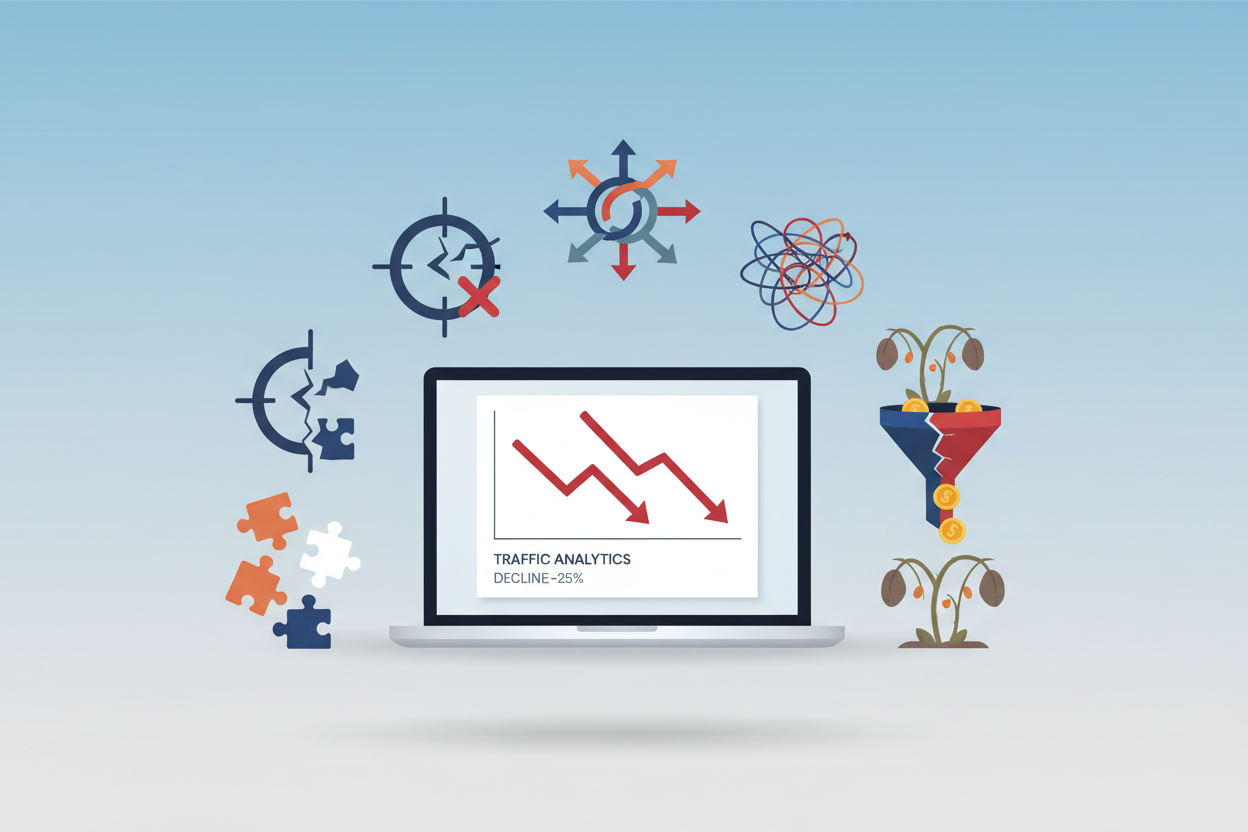
Ever wondered why your carefully crafted ads aren’t driving the traffic you expected? You’re not alone. After analyzing thousands of campaigns and working with businesses of all sizes, I’ve noticed the same traffic-killing mistakes appearing over and over again. The frustrating part? Most of these errors are completely avoidable once you know what to look for.
In this comprehensive guide, we’ll dive deep into the five most common advertising mistakes that could be sabotaging your traffic goals. More importantly, I’ll show you exactly how to fix them and turn your underperforming campaigns into traffic-generating machines. 🚀
Table of Contents
1. Introduction
2. Mistake #1: Targeting Everyone Instead of Someone
3. Mistake #2: Ignoring Mobile Optimization
4. Mistake #3: Using Weak or Generic Call-to-Actions
5. Mistake #4: Neglecting Ad Testing and Optimization
6. Mistake #5: Poor Landing Page Alignment
7. How to Avoid These Traffic-Killing Mistakes
8. Frequently Asked Questions
9. Conclusion
Mistake #1: Targeting Everyone Instead of Someone 🎯
Here’s the thing about trying to appeal to everyone: you end up appealing to no one. I see this mistake constantly, especially with new advertisers who think casting the widest possible net will bring in more traffic. It’s like shouting into a crowded room instead of having a meaningful conversation with the right person.
When you create ads without a specific audience in mind, your messaging becomes diluted and generic. Your potential customers scroll right past because nothing resonates with their particular needs, pain points, or desires. The result? Wasted ad spend and disappointing traffic numbers.
The solution lies in creating detailed buyer personas and speaking directly to them. Instead of “fitness equipment for everyone,” try “home gym solutions for busy parents who want to stay fit without leaving the house.” See the difference? The second approach immediately connects with a specific group of people who will think, “That’s exactly what I need!” 💡
Start by analyzing your existing customer data. What demographics perform best? What interests do they share? Which pain points do they consistently mention? Use this information to create laser-focused ad campaigns that speak directly to your ideal audience’s heart and mind.
Mistake #2: Ignoring Mobile Optimization 📱
Let me share a sobering statistic: over 60% of all web traffic now comes from mobile devices. Yet, I still encounter ads and landing pages that look terrible on smartphones and tablets. It’s like having a beautiful storefront that’s only accessible by ladder – you’re automatically excluding the majority of your potential customers.
Mobile optimization isn’t just about making things smaller. It’s about creating an entirely different user experience that acknowledges how people actually use their phones. Mobile users are often multitasking, have shorter attention spans, and expect lightning-fast load times.
Your ads need to be visually striking even on small screens. Text should be large enough to read without squinting, images should be clear and impactful, and your call-to-action buttons need to be easily tappable with a thumb. If someone has to pinch and zoom to interact with your ad, you’ve already lost them.
Beyond the ads themselves, your landing pages must be mobile-optimized too. A desktop-perfect page that takes forever to load on mobile or requires horizontal scrolling will send visitors running faster than you can say “bounce rate.” Test everything on multiple devices and connection speeds. Your future traffic numbers will thank you! 🙏
Mistake #3: Using Weak or Generic Call-to-Actions 🔥
“Click here.” “Learn more.” “Submit.” If these phrases make up the majority of your call-to-actions, we need to talk. These generic, uninspiring CTAs are traffic killers because they don’t give people a compelling reason to take action.
Think about it from your audience’s perspective. They’re scrolling through their feed, mildly interested in what you’re offering, and then they see “Click here.” What emotions does that evoke? What value does it promise? Exactly – none.
Effective call-to-actions are specific, benefit-driven, and create a sense of urgency or curiosity. Instead of “Learn more,” try “Discover the 3 secrets that doubled my sales in 30 days.” Rather than “Sign up,” use “Get your free traffic audit now.” The difference is night and day.
Your CTA should be the natural next step in your customer’s journey. It should feel less like a demand and more like an irresistible opportunity. Use action words that paint a picture of the transformation or benefit they’ll receive. Make it feel exclusive, time-sensitive, or valuable enough that not clicking feels like a missed opportunity.
Remember, you often have just seconds to capture someone’s attention. Your call-to-action might be the deciding factor between a new visitor and a missed opportunity. Make every word count! ✨
Mistake #4: Neglecting Ad Testing and Optimization 📊
I’ve met countless business owners who create one ad, launch it, and then wonder why it’s not performing. It’s like expecting to hit a bullseye on your first try while blindfolded. The most successful advertisers I know are obsessive about testing and optimization – and for good reason.
Every audience is different. What works for one business might flop for another, even in the same industry. The only way to know what resonates with your specific audience is to test different approaches systematically. This means testing headlines, images, ad copy, targeting options, and call-to-actions.
But here’s where many people go wrong: they test too many variables at once. If you change your headline, image, and CTA simultaneously, you won’t know which change caused the improvement or decline in performance. Test one element at a time, give each test enough time to gather statistically significant data, then implement the winner before testing the next variable.
The platforms themselves are constantly evolving too. What worked six months ago might not work today. Algorithm changes, new features, and shifting user behaviors mean your ads need constant attention and optimization. Set aside time each week to review performance data and make informed adjustments.
Think of ad optimization as an ongoing conversation with your audience. You’re constantly learning what they respond to, what turns them off, and what motivates them to take action. The businesses that embrace this testing mindset consistently see better traffic and conversion rates over time. 📈
Mistake #5: Poor Landing Page Alignment 🎪
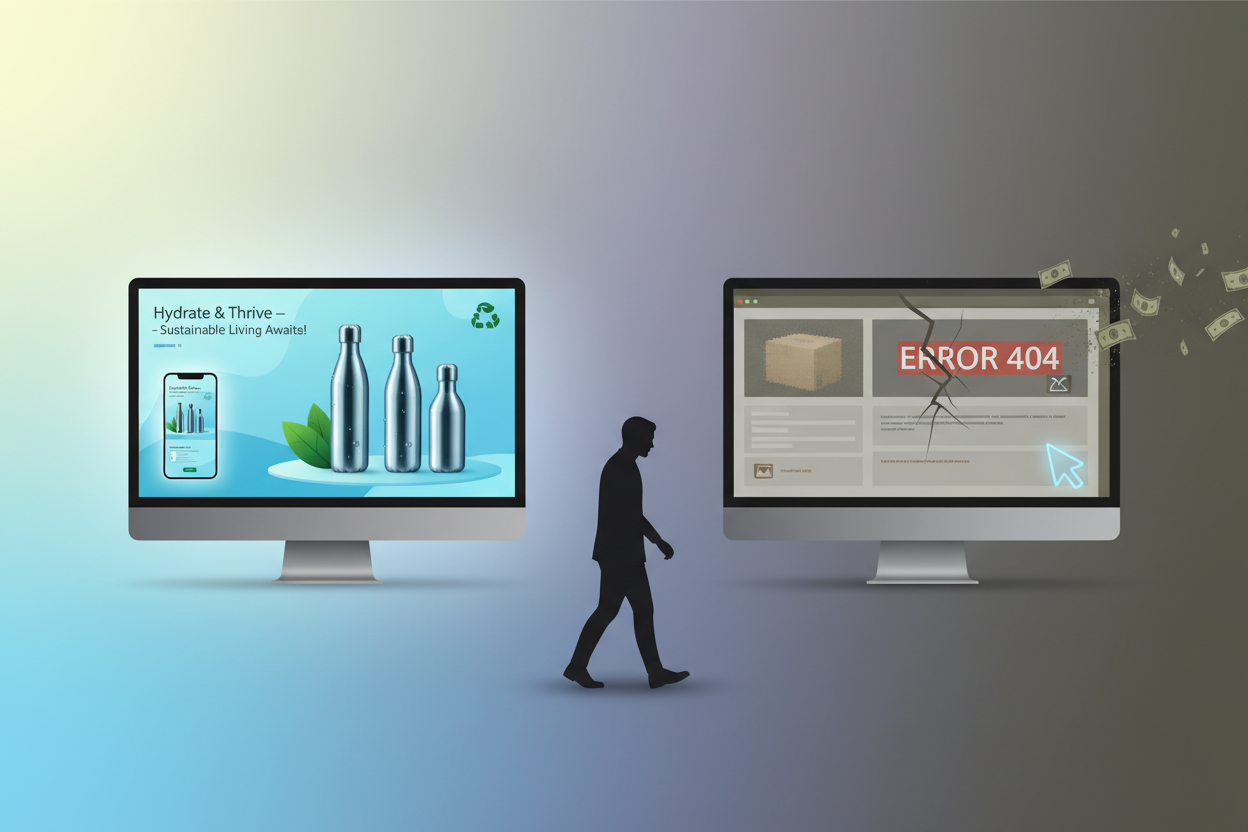
Picture this scenario: someone clicks on your ad about “50% off running shoes” and lands on your homepage with no mention of the sale. Frustrating, right? This disconnect between ad promise and landing page reality is a massive traffic killer that I see far too often.
When there’s misalignment between your ad and landing page, visitors feel deceived or confused. They expected one thing based on your ad but found something completely different. The natural response is to hit the back button and never return. You’ve not only lost that potential customer but also wasted the money you spent getting them to click in the first place.
Successful ad campaigns maintain perfect alignment throughout the entire user journey. If your ad promises a free guide, the landing page should immediately present that guide. If your ad highlights a specific product, that product should be the star of your landing page. The messaging, visuals, and offer should feel like a natural continuation of the ad experience.
This alignment goes beyond just matching offers. The tone, design elements, and even color schemes should create a cohesive experience. If your ad has a playful, colorful design, but your landing page is corporate and grey, visitors will subconsciously feel like they’re in the wrong place.
Take time to map out your entire customer journey from ad click to conversion. Every step should feel intentional and connected. When done right, visitors will flow naturally from interest to action without any jarring disconnects that might cause them to abandon ship. 🚢
How to Avoid These Traffic-Killing Mistakes 💪
Now that we’ve identified the problems, let’s talk solutions. Avoiding these traffic-killing mistakes requires a strategic approach and consistent attention to detail.
Start with a comprehensive audit of your current campaigns. Look at each ad through the lens of these five mistakes. Are you targeting too broadly? Do your ads look good on mobile? Are your CTAs compelling? When was the last time you tested different variations? Does your landing page match your ad promise?
Create a systematic approach to campaign management. Develop templates for different types of ads, establish testing schedules, and set up regular review processes. The most successful advertisers treat their campaigns like living, breathing entities that need constant care and attention.
Invest in the right tools and analytics. You can’t optimize what you don’t measure. Make sure you’re tracking the right metrics and have systems in place to quickly identify what’s working and what isn’t. Sometimes a small tweak can dramatically improve your results.
Finally, stay curious and keep learning. The digital advertising landscape changes rapidly, and what works today might not work tomorrow. Follow industry blogs, attend webinars, and never stop testing new approaches. Your willingness to adapt and improve will directly impact your traffic success. 🎯
Frequently Asked Questions ❓
Q: How long should I run an ad test before making changes?
A: Generally, you want to run tests for at least 7-14 days to account for daily variations in audience behavior. However, the key is achieving statistical significance – you need enough data to make confident decisions. For most campaigns, this means at least 100-200 clicks per variation.
Q: What’s the biggest red flag that my ads are poorly targeted?
A: High click costs combined with low conversion rates often indicate poor targeting. If people are clicking but not converting, you’re likely attracting the wrong audience. Also, if your engagement rates are consistently low, your messaging probably isn’t resonating with your target market.
Q: How do I know if my landing page is properly aligned with my ads?
A: Track your bounce rate and time on page. If visitors are leaving immediately after arriving, there’s likely a disconnect. Also, ask yourself: if you clicked on your ad, would you be satisfied with what you found on the landing page? The answer should be an enthusiastic yes.
Q: What’s the most important element to test first in my ads?
A: Start with your headline, as it’s often the first thing people see and has the biggest impact on whether someone stops scrolling. Once you’ve optimized your headline, move on to testing images, then call-to-actions, and finally your targeting options.
Q: How much should I spend on testing before giving up on a campaign?
A: This depends on your industry and average customer value, but a good rule of thumb is to spend at least 3-5 times your target cost per acquisition before making major changes. If you’re still not seeing results after thorough testing and optimization, it might be time to reconsider your offer or target market.
Conclusion: Your Path to Traffic Success 🌟
These five common ad mistakes – broad targeting, poor mobile optimization, weak CTAs, lack of testing, and misaligned landing pages – are responsible for countless failed campaigns and frustrated business owners. The good news? Now that you know what to look for, you’re already ahead of most of your competition.
Remember, successful advertising isn’t about perfection from day one. It’s about continuous improvement, testing, and optimization. Every mistake is a learning opportunity, and every failed test brings you closer to understanding what truly resonates with your audience.
Start by auditing your current campaigns against these five mistakes. Pick the biggest issue and focus on fixing it first. Once you’ve addressed that problem, move on to the next one. Small, consistent improvements will compound over time into significant traffic increases.
The digital advertising landscape will continue to evolve, but the fundamentals remain the same: know your audience, create compelling experiences, test relentlessly, and always deliver on your promises. Master these principles, and you’ll not only avoid these traffic-killing mistakes but build campaigns that consistently drive quality visitors to your business.
Your traffic success story starts with recognizing these mistakes and taking action to fix them. The question isn’t whether you’ll make mistakes – it’s how quickly you’ll learn from them and optimize for better results. Here’s to your future traffic growth! 🚀


