

How to Promote Your App and Drive Downloads: A Complete Guide to Mobile App Marketing Success 📱
Table of Contents
1. Introduction: The App Marketing Challenge
2. Understanding Your Target Audience
3. App Store Optimization (ASO): Your Foundation
4. Social Media Marketing Strategies
5. Content Marketing and Blogging
6. Influencer Partnerships and Collaborations
7. Paid Advertising Campaigns
8. Email Marketing for App Promotion
9. Public Relations and Media Outreach
10. Measuring Success and Analytics
11. Conclusion
12. Frequently Asked Questions
Introduction: The App Marketing Challenge 🚀
You’ve spent months, maybe even years, developing the perfect app. The code is clean, the user interface is intuitive, and you’re confident it solves a real problem for your target users. But here’s the harsh reality: building a great app is only half the battle. With over 4.8 million apps available across iOS and Android app stores, getting your creation noticed feels like finding a needle in a haystack.
I’ve been in the app marketing trenches for over a decade, and I’ve seen brilliant apps fail because their creators didn’t invest enough time in promotion. Conversely, I’ve watched mediocre apps achieve massive success through strategic marketing efforts. The difference? Understanding that app promotion isn’t an afterthought – it’s an integral part of your product’s success story.
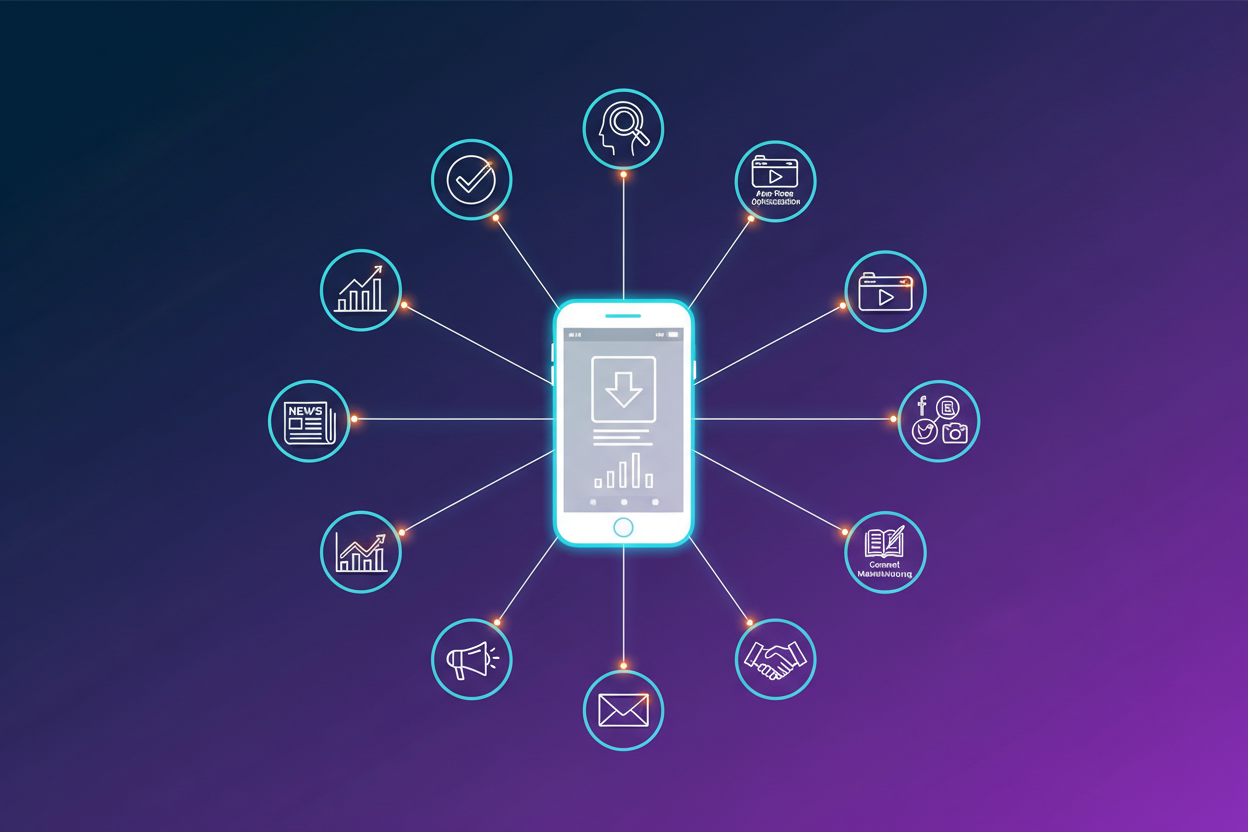
This comprehensive guide will walk you through proven strategies to promote your app effectively and drive meaningful downloads. Whether you’re a solo developer working with a shoestring budget or part of a larger team with marketing resources, these tactics will help you cut through the noise and reach your ideal users.

Understanding Your Target Audience 🎯
Before diving into promotional tactics, you need to understand exactly who you’re trying to reach. Creating detailed user personas isn’t just marketing fluff – it’s the foundation of every successful app promotion strategy.
Start by analyzing your existing user data if you have any. Look at demographics, behavior patterns, and usage statistics. If you’re launching a new app, conduct surveys, interviews, and competitive analysis to understand your potential users’ pain points, preferences, and digital habits.
Consider where your audience spends their time online. Are they scrolling through TikTok during lunch breaks, or are they more likely to discover apps through professional networks like LinkedIn? Understanding these nuances will inform every marketing decision you make moving forward.
Remember, trying to appeal to everyone often means appealing to no one. It’s better to have a smaller, highly engaged audience than a large, disinterested one. Focus on quality over quantity when building your user base.
App Store Optimization (ASO): Your Foundation 📈
App Store Optimization is your app’s first impression, and you know what they say about first impressions. ASO is essentially SEO for app stores, helping your app rank higher in search results and conversion better when users find it.
Your app title should include your primary keyword while remaining catchy and memorable. Don’t stuff it with keywords – app stores penalize this behavior. Instead, focus on one or two highly relevant terms that users would naturally search for.
The app description is where you can really shine. Use the first few lines to hook users immediately, as this text appears in search results. Include relevant keywords naturally throughout the description, but prioritize readability and user benefits over keyword density.
Visual elements are equally crucial. Your app icon should be distinctive and recognizable even at small sizes. Screenshots should tell a story about your app’s key features and benefits. Consider using captions or annotations to highlight important functionality.
Don’t underestimate the power of app reviews and ratings. Encourage satisfied users to leave positive reviews by implementing gentle in-app prompts at strategic moments – perhaps after they’ve completed a task successfully or achieved a milestone.
Social Media Marketing Strategies 📲
Social media isn’t just about posting pretty pictures and hoping for the best. Each platform requires a tailored approach based on your audience and app type.
Instagram works brilliantly for visually appealing apps. Share behind-the-scenes content, user-generated content, and feature highlights through posts and Stories. Use relevant hashtags strategically – research shows that posts with 9-11 hashtags tend to perform best.
TikTok has become a powerhouse for app discovery, especially among younger demographics. Create short, engaging videos showcasing your app’s coolest features. Jump on trending sounds and challenges while maintaining relevance to your app’s value proposition.
Twitter excels for real-time engagement and customer support. Share quick tips, respond to user questions, and participate in relevant conversations. Don’t just broadcast – engage authentically with your community.
LinkedIn works well for B2B apps or productivity tools. Share industry insights, case studies, and professional tips that demonstrate your app’s value in a business context.
The key across all platforms is consistency and authenticity. Users can spot promotional content from a mile away, so focus on providing genuine value while subtly showcasing your app’s benefits.
Content Marketing and Blogging ✍️
Content marketing is a long-term strategy that builds trust and establishes your brand as an authority in your niche. It’s not about immediate downloads – it’s about creating valuable resources that attract and engage your target audience over time.
Start a blog that addresses your users’ pain points and interests. If you’ve developed a fitness app, write about workout tips, nutrition advice, and wellness trends. For a productivity app, share time management strategies and workplace efficiency hacks.
Guest posting on established blogs in your industry can significantly expand your reach. Pitch unique, valuable content to relevant publications, and include subtle mentions of how your app addresses specific challenges discussed in the article.
Video content continues to dominate engagement metrics across platforms. Create tutorials, feature demonstrations, and user success stories. YouTube, in particular, serves as both a content platform and a search engine, making it valuable for long-term discoverability.
Podcasting is another underutilized channel for app promotion. Either start your own podcast or appear as a guest on shows relevant to your industry. The intimate nature of podcast consumption often leads to higher engagement and trust.
Influencer Partnerships and Collaborations 🤝
Influencer marketing has evolved far beyond celebrity endorsements. Micro-influencers with smaller, highly engaged audiences often deliver better ROI than mega-influencers with millions of followers.
Look for influencers who genuinely align with your app’s values and target audience. A fitness influencer promoting a meditation app might seem like a stretch, but if they regularly discuss mental health and wellness, it could be a perfect match.
Don’t just hand over your app and hope for the best. Provide influencers with key talking points, unique promo codes for tracking, and creative freedom to present your app authentically to their audience.
Consider long-term partnerships rather than one-off posts. Authentic relationships with influencers who become genuine users of your app often yield better results than transactional collaborations.
User-generated content campaigns can also be incredibly effective. Encourage existing users to share their experiences with branded hashtags, and feature the best submissions on your own channels.
Paid Advertising Campaigns 💰
While organic growth is ideal, paid advertising can accelerate your app’s visibility and downloads when executed strategically. The key is starting small, testing thoroughly, and scaling what works.
Apple Search Ads and Google Ads for app promotion offer direct placement in app store search results. These platforms typically deliver high-intent users who are already looking for apps like yours.
Social media advertising allows for sophisticated targeting based on demographics, interests, and behaviors. Facebook and Instagram ads can be particularly effective for reaching users similar to your existing audience through lookalike targeting.
Retargeting campaigns help re-engage users who visited your app store page but didn’t download. These users have already shown interest, making them more likely to convert with the right message.
Always set clear campaign objectives and track relevant metrics. Cost per install (CPI) is important, but lifetime value (LTV) and user retention are ultimately more crucial for sustainable growth.
Email Marketing for App Promotion 📧
Email marketing might seem old-school, but it remains one of the highest ROI marketing channels available. The key is building a quality email list before your app launches.
Create a compelling lead magnet related to your app’s core functionality. This could be a free guide, exclusive content, or early access to beta features. Use this to capture email addresses from interested users.
Develop a launch sequence that builds anticipation and educates subscribers about your app’s benefits. Share development updates, behind-the-scenes content, and exclusive previews to keep your audience engaged.
Post-launch, use email to nurture existing users and encourage reviews, referrals, and feature adoption. Segment your list based on user behavior and engagement levels to deliver more personalized content.
Don’t forget about win-back campaigns for users who’ve downloaded but aren’t actively using your app. A well-timed email highlighting new features or offering support can re-engage dormant users.
Public Relations and Media Outreach 📰
Getting featured in relevant publications can provide massive exposure and credibility for your app. The key is crafting compelling stories that journalists actually want to cover.
Develop multiple story angles beyond just “we launched an app.” Focus on industry trends you’re addressing, unique features that solve common problems, or interesting data insights from your user base.
Build relationships with journalists and bloggers in your industry before you need coverage. Follow their work, engage with their content, and provide value when possible.
Press releases still have their place, but they should be part of a broader outreach strategy. Personalized pitches that demonstrate familiarity with a journalist’s beat and recent work are far more effective.
Consider timing your outreach around industry events, relevant news cycles, or seasonal trends that make your app particularly newsworthy.
Measuring Success and Analytics 📊
You can’t optimize what you don’t measure. Implementing proper analytics from day one is crucial for understanding what’s working and where to focus your efforts.
Track both vanity metrics and actionable metrics. While download numbers feel good, metrics like user retention, session length, and in-app engagement provide better insights into your app’s actual performance.
Use attribution tools to understand which marketing channels drive the highest-quality users. This data helps you allocate budget more effectively and double down on successful strategies.
Set up cohort analysis to understand how user behavior changes over time. This insight helps you identify when users typically churn and implement retention strategies accordingly.
Regular A/B testing of your marketing materials, app store listings, and in-app messaging helps you continuously improve performance based on real user data rather than assumptions.
Conclusion 🎉
Promoting your app successfully requires a multi-faceted approach that combines organic and paid strategies. There’s no single magic bullet that will guarantee success, but consistent effort across multiple channels will compound over time to drive meaningful results.
Remember that app promotion is an ongoing process, not a one-time event. User acquisition is just the beginning – retaining and engaging those users is equally important for long-term success.
Start with the fundamentals like ASO and understanding your audience, then gradually expand into other channels based on your resources and what resonates with your users. Stay patient, stay consistent, and keep iterating based on data and user feedback.
The app market is competitive, but there’s always room for apps that provide genuine value and are promoted strategically. Your app deserves to be discovered by the users who need it most – these strategies will help make that happen.
Frequently Asked Questions ❓
How long does it take to see results from app promotion efforts?
Results vary significantly depending on your strategy and budget. Paid advertising can drive immediate downloads, while organic strategies like content marketing and ASO typically take 3-6 months to show substantial results. The key is maintaining consistent effort across multiple channels.
What’s the most cost-effective way to promote an app with a limited budget?
Focus on ASO first, as it’s free and provides long-term benefits. Then prioritize content marketing and organic social media engagement. These strategies require time investment rather than monetary investment but can be highly effective when executed consistently.
How important are app store reviews for promotion?
Extremely important. Apps with higher ratings and more reviews rank better in app store search results and convert better when users find them. Positive reviews also provide social proof that encourages downloads. Focus on delivering an excellent user experience to naturally encourage positive reviews.
Should I promote my app before it’s launched?
Absolutely! Building anticipation before launch through email marketing, social media, and content creation can create momentum for a successful launch. Consider creating a landing page to capture interested users’ emails and build a community around your upcoming app.
How do I know which marketing channels work best for my app?
Use attribution tracking and analytics to measure which channels drive the highest-quality users. Focus on metrics beyond just downloads – look at user retention, engagement, and lifetime value. Test multiple channels simultaneously, then allocate more resources to the most effective ones.


