


How to Promote Your Service Business Using Case Study Marketing: A Complete Guide to Converting Prospects into Clients 📈
Table of Contents
1. Introduction: Why Case Study Marketing Works
2. What Makes Case Study Marketing So Powerful for Service Businesses?
3. Essential Elements of a High-Converting Case Study
4. How to Choose the Right Client Stories for Maximum Impact
5. Step-by-Step Process for Creating Compelling Case Studies
6. Best Practices for Promoting Your Case Studies
7. Common Mistakes to Avoid in Case Study Marketing
8. Measuring the Success of Your Case Study Marketing
9. Conclusion: Transform Your Service Business with Strategic Case Studies
10. Frequently Asked Questions
Introduction: Why Case Study Marketing Works 🎯
Picture this: You’re a potential client researching service providers, and you come across two businesses. The first one talks about their expertise and lists their services. The second one shows you exactly how they helped a company just like yours increase revenue by 40% in six months. Which one would you choose?
That’s the magic of case study marketing – it transforms abstract promises into concrete proof. For service businesses, where trust and credibility are everything, case studies serve as your most powerful sales tool. They don’t just tell prospects what you can do; they show them what you’ve already accomplished.
In today’s skeptical marketplace, where consumers are bombarded with marketing messages, case studies cut through the noise by providing authentic, results-driven narratives that resonate with potential clients facing similar challenges.
What Makes Case Study Marketing So Powerful for Service Businesses? 💪
Service businesses face a unique challenge – they’re selling something intangible. Unlike product companies that can showcase physical items, service providers must convince prospects to invest in their expertise, processes, and promises. This is where case study marketing becomes invaluable.

Case studies work because they leverage the psychological principle of social proof. When prospects see that you’ve successfully helped businesses similar to theirs, they naturally assume you can do the same for them. It’s like having a trusted friend recommend your services, except the recommendation comes with detailed evidence and measurable results.
Moreover, case studies address the biggest concern service buyers have: “Will this actually work for my business?” By presenting real scenarios, challenges, solutions, and outcomes, you’re essentially providing a preview of what working with you looks like. This transparency builds trust and reduces the perceived risk of hiring your services.
The beauty of case study marketing lies in its versatility. A single well-crafted case study can serve multiple purposes – it can be a sales presentation, website content, social media material, email marketing ammunition, and even the foundation for speaking engagements or webinars.
Essential Elements of a High-Converting Case Study 🔧
Not all case studies are created equal. The difference between a mediocre case study and one that converts prospects into clients lies in the structure and elements you include. Think of your case study as a compelling story with a clear beginning, middle, and end.
Start with a captivating headline that immediately communicates the value. Instead of “How We Helped ABC Company,” try “How ABC Company Doubled Their Lead Generation in 90 Days Using Our Marketing Framework.” The second headline is specific, includes a timeframe, and promises a concrete outcome.
The client background section should paint a picture that your target prospects can relate to. Include details about the company size, industry, and situation that led them to seek your services. This helps readers identify with the client and see themselves in a similar position.
The challenge section is where you dig deep into the problems your client was facing. Be specific about pain points, failed attempts at solutions, and the consequences of inaction. This creates emotional resonance with prospects experiencing similar issues.
Your solution section should clearly explain your approach without giving away proprietary methods. Focus on the strategy, process, and unique value you brought to the table. Include any innovative techniques or insights that set your approach apart from competitors.
The results section is your moment to shine, but authenticity is crucial. Include specific metrics, percentages, and timeframes. If possible, use visual elements like charts or graphs to make the data more digestible and impactful.
How to Choose the Right Client Stories for Maximum Impact 🎪
Selecting the right clients for your case studies is as important as crafting the stories themselves. You want to feature clients whose situations mirror those of your ideal prospects. If you primarily serve mid-sized tech companies, showcasing how you helped a Fortune 500 manufacturing giant might not resonate with your target audience.
Look for clients who achieved remarkable, measurable results through your services. The more impressive and quantifiable the outcomes, the more compelling your case study will be. A 300% increase in website traffic is more powerful than “improved online presence.”
Consider the diversity of challenges you’ve solved. Having case studies that address different pain points allows you to connect with various segments of your target market. One case study might focus on cost reduction, another on revenue growth, and a third on operational efficiency.
Don’t overlook the importance of client willingness to participate. Some of your best success stories might come from clients who prefer to remain anonymous or are restricted by confidentiality agreements. While you can still create valuable case studies using anonymous clients, having clients who are willing to be quoted and possibly participate in video testimonials adds credibility and authenticity.
Timing matters too. Recent case studies feel more relevant and demonstrate that your methods are current and effective in today’s business environment. While older success stories have value, leading with recent wins shows prospects that you’re actively delivering results.
Step-by-Step Process for Creating Compelling Case Studies 📝
Creating an effective case study requires a systematic approach that ensures you capture all the necessary information while maintaining narrative flow. Start by conducting thorough interviews with key stakeholders from the client’s team. Don’t just talk to your primary contact – speak with end-users, decision-makers, and anyone else who was impacted by your services.
During these interviews, focus on gathering specific data and concrete examples. Ask questions like “What was the exact situation before we started working together?” and “Can you quantify the improvement you’ve seen?” Encourage clients to share specific anecdotes and moments when they realized your services were making a difference.
Document the timeline of your engagement meticulously. Understanding the sequence of events, milestones, and breakthrough moments helps create a logical narrative that prospects can follow. This timeline also helps identify the key turning points that led to success.
When writing the case study, use a storytelling approach that engages readers emotionally while providing factual information. Start with a hook that captures attention, build tension by describing the challenges, and then provide relief through your solution and results.
Include quotes from multiple stakeholders to add authenticity and different perspectives. A quote from the CEO about strategic impact combined with a quote from an operations manager about day-to-day improvements provides a well-rounded view of your value.
Visual elements can significantly enhance your case study’s impact. Include before-and-after screenshots, charts showing improvement metrics, photos from project implementations, or even short video testimonials if possible.
Best Practices for Promoting Your Case Studies 📢
Creating outstanding case studies is only half the battle – you need to get them in front of the right people at the right time. Your website should feature case studies prominently, not buried in a hard-to-find section. Consider creating a dedicated case studies page and also integrating relevant case studies into your service pages.
Email marketing provides an excellent opportunity to share case studies with prospects at various stages of the buying journey. A prospect who’s just learning about your services might appreciate a case study that demonstrates your range of capabilities, while someone closer to making a decision might benefit from a case study that addresses their specific industry or challenge.
Social media platforms offer multiple ways to promote case studies. LinkedIn is particularly effective for B2B service businesses. You can share case study highlights, create carousel posts with key statistics, or even turn case studies into LinkedIn articles that position you as a thought leader.
Sales presentations become much more powerful when they include relevant case studies. Train your sales team to identify which case studies resonate with different types of prospects and how to weave them naturally into conversations.
Consider repurposing your case studies into different formats. A comprehensive written case study can become a webinar, a series of social media posts, an infographic, a podcast episode, or even a speaking engagement topic. This maximizes the return on investment of your case study creation efforts.
Don’t forget about SEO opportunities. Case studies can rank for industry-specific keywords and attract prospects who are researching solutions to problems similar to those you’ve solved for clients.
Common Mistakes to Avoid in Case Study Marketing ⚠️
One of the biggest mistakes service businesses make is creating case studies that read like advertisements rather than authentic stories. Prospects can easily detect when a case study has been overly sanitized or exaggerated. Maintain honesty about challenges faced during the engagement and be realistic about results achieved.
Another common pitfall is focusing too much on your process and not enough on client outcomes. While it’s important to explain your methodology, prospects care more about results than the intricate details of how you achieved them. Strike a balance that demonstrates competence without overwhelming readers with technical jargon.
Many businesses make the mistake of creating generic case studies that try to appeal to everyone. This approach often results in case studies that don’t strongly resonate with anyone. It’s better to create targeted case studies that speak directly to specific audience segments.
Neglecting to update case studies is another frequent error. Business environments change rapidly, and case studies that reference outdated technologies, market conditions, or business practices can make your services seem irrelevant or behind the times.
Finally, don’t underestimate the importance of getting proper permissions and approvals from clients before publishing case studies. Legal issues can arise if clients feel their confidential information has been shared inappropriately or if they haven’t explicitly agreed to be featured in your marketing materials.
Measuring the Success of Your Case Study Marketing 📊
To maximize the effectiveness of your case study marketing efforts, you need to track relevant metrics and continuously optimize your approach. Website analytics can reveal which case studies generate the most traffic, time on page, and conversion actions like contact form submissions or resource downloads.
Sales team feedback provides valuable insights into how case studies perform in real-world situations. Regular check-ins with your sales team can reveal which case studies are most effective at different stages of the sales process and with different types of prospects.
Lead quality metrics help determine whether your case studies are attracting the right type of prospects. If you’re generating more leads but they’re not converting to clients, you might need to adjust your case study selection or messaging to better align with your ideal client profile.
Social media engagement metrics show how well your case studies resonate with your online audience. High engagement rates indicate that your case studies are striking the right tone and addressing relevant challenges.
Client feedback on case studies can provide insights into their accuracy and impact. Clients featured in case studies often hear from their peers about the content, which can give you valuable feedback on how your target market perceives your work.
Conclusion: Transform Your Service Business with Strategic Case Studies 🚀
Case study marketing isn’t just another marketing tactic – it’s a fundamental shift toward proof-based selling that can transform how prospects perceive and engage with your service business. By showcasing real results for real clients, you’re building a foundation of trust and credibility that no amount of traditional advertising can match.
The key to success lies in approaching case studies strategically. Choose the right client stories, craft them with care and authenticity, and promote them consistently across multiple channels. Remember that case studies are living documents that should evolve with your business and market conditions.
Start small if you need to – even one well-crafted case study can make a significant impact on your marketing efforts. As you develop more case studies and refine your approach, you’ll build a powerful library of proof that demonstrates your value and differentiates your services from competitors.
The investment in case study marketing pays dividends not just in new client acquisition, but also in client retention and referrals. When existing clients see their success stories featured professionally, it reinforces their decision to work with you and often motivates them to refer others.
Your prospects are looking for evidence that you can deliver results. Case studies provide that evidence in the most compelling way possible – through the authentic voices and experiences of clients who have walked the path they’re considering. Make case study marketing a cornerstone of your service business promotion strategy, and watch as prospects transform from skeptical browsers into confident buyers.
Frequently Asked Questions 🤔
How long should a case study be for maximum impact?
The ideal length depends on your audience and distribution channel, but most effective case studies range from 800-1500 words. For web-based case studies, aim for 1000-1200 words to provide sufficient detail while maintaining reader engagement. Shorter versions (300-500 words) work well for sales presentations and social media, while longer formats (1500+ words) are suitable for in-depth industry publications.
How many case studies should a service business have?
Start with 3-5 high-quality case studies that represent your core services and target markets. As your business grows, aim to have 8-12 case studies covering different industries, service offerings, and client sizes. The key is quality over quantity – it’s better to have fewer outstanding case studies than many mediocre ones.
What if a client doesn’t want to be identified in a case study?
You can still create valuable anonymous case studies by focusing on the industry, company size, and challenge without revealing identifying information. Use terms like “a leading software company” or “a mid-sized manufacturing firm.” While named case studies carry more credibility, anonymous ones can still be effective if the results are compelling and the story is well-told.
How often should I update my case studies?
Review your case studies annually and update them as needed. Replace outdated statistics, refresh screenshots or visuals, and ensure all information remains current. If market conditions or your services have evolved significantly, consider creating new case studies that reflect your current capabilities and market position.
Can I use case studies for businesses that are no longer clients?
Yes, as long as you have proper permission and the case study accurately represents the work performed and results achieved. However, be prepared to answer questions about why the client relationship ended, and consider whether featuring former clients might raise concerns with prospects about client retention.
What’s the best way to get clients to agree to participate in case studies?
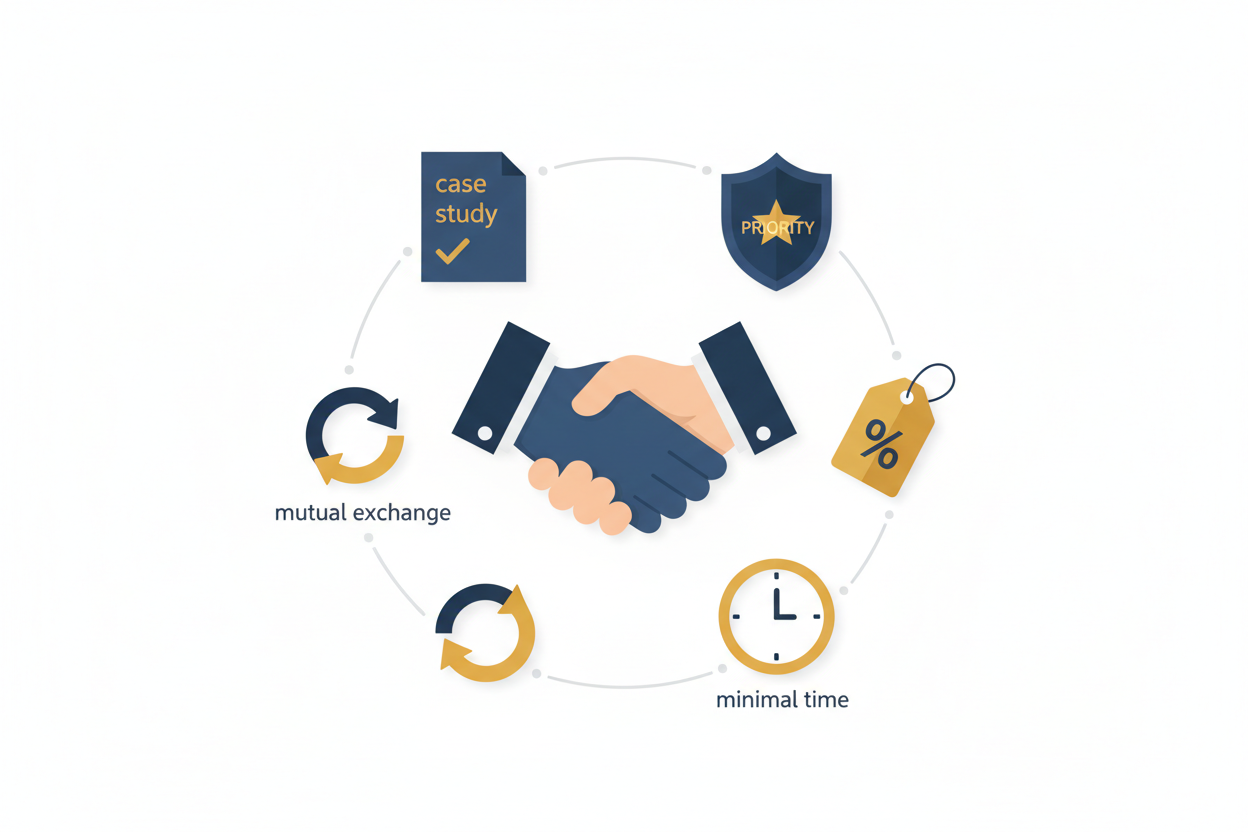
Build case study participation into your client onboarding process by explaining the mutual benefits. Offer to share the completed case study with them for their own marketing purposes, and consider providing incentives like service discounts or priority support. Most importantly, make the process easy for them by handling all the writing and requiring minimal time investment from their team.


