

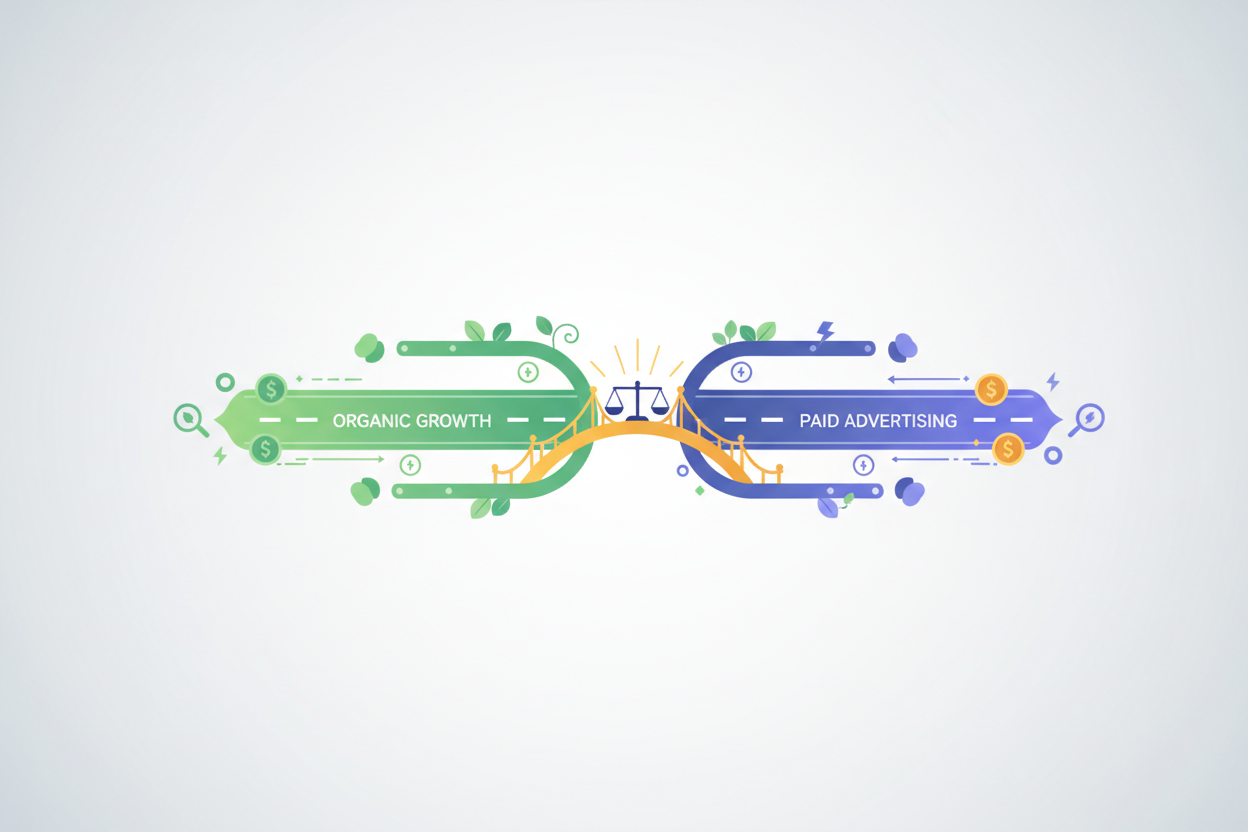
Paid vs. Organic: Building a Balanced Traffic Strategy That Actually Works 🚀
Table of Contents
1. Understanding the Traffic Strategy Landscape
2. The Power of Organic Traffic: Your Long-Term Investment
3. Paid Traffic: The Fast Lane to Visibility
4. Why You Need Both: The Synergy Effect
5. Building Your Balanced Traffic Strategy
6. Budget Allocation: Finding Your Sweet Spot
7. Measuring Success: KPIs That Matter
8. Common Mistakes to Avoid
9. Future-Proofing Your Strategy
10. FAQs
Understanding the Traffic Strategy Landscape 📊
Let’s be honest – if you’re running a business online, you’ve probably found yourself in the eternal debate: should I focus on organic traffic or invest in paid advertising? I’ve been there, staring at analytics dashboards at 2 AM, wondering if I’m making the right choice. The truth is, this shouldn’t be an either-or decision.
In today’s digital marketing landscape, successful businesses understand that a balanced traffic strategy combining both paid and organic approaches isn’t just recommended – it’s essential for sustainable growth. Think of it like a well-balanced diet; you need different nutrients from various sources to thrive.
The digital marketing world has evolved dramatically over the past decade. What worked five years ago might leave you scratching your head today. Algorithm changes, increased competition, and shifting consumer behaviors have made it clear that putting all your eggs in one basket is a recipe for disaster. 🥚
The Power of Organic Traffic: Your Long-Term Investment 🌱
Organic traffic is like planting a tree – it takes time to grow, but once it’s established, it provides consistent value for years. When I first started focusing on SEO, I’ll admit I was impatient. Waiting months to see results felt like watching paint dry. But here’s what I learned: organic traffic is worth the wait.
Benefits of Organic Traffic:
Organic search results build incredible trust with your audience. Studies show that users are more likely to click on organic results than paid ads, with organic listings receiving 8.5 times more clicks than paid search ads. There’s something about earning your spot at the top of search results that resonates with people.
The cost-effectiveness of organic traffic is unmatched. Once you rank well for your target keywords, you’re essentially getting free traffic. I’ve seen businesses generate millions in revenue from content that cost them a few hundred dollars to create years ago. That’s the compound effect of organic traffic in action.
However, organic traffic isn’t without its challenges. It requires patience, consistent effort, and staying up-to-date with ever-changing search algorithms. Google’s algorithm updates can sometimes feel like emotional roller coasters – one day you’re ranking #1, the next you’re on page three wondering what happened. 📉
Key Organic Traffic Strategies:
Content marketing remains the backbone of organic traffic generation. Creating valuable, relevant content that answers your audience’s questions positions you as an authority in your field. Technical SEO ensures search engines can crawl and understand your website effectively. Don’t overlook the importance of page speed, mobile optimization, and proper site structure.
Paid Traffic: The Fast Lane to Visibility ⚡
If organic traffic is like planting a tree, paid advertising is like buying fully grown plants from a nursery. You get immediate results, but you need to keep investing to maintain them. There’s something incredibly satisfying about launching a campaign in the morning and seeing traffic pour in by afternoon.
Advantages of Paid Traffic:
The speed of paid advertising is unmatched. Need traffic today? Launch a Google Ads campaign. Want to test a new product? Facebook ads can get you feedback within hours. This immediacy is crucial for time-sensitive promotions, product launches, or when you need quick market validation.
Paid platforms offer incredible targeting precision. You can reach people based on demographics, interests, behaviors, and even life events. I’ve run campaigns targeting “people who recently moved and are interested in home improvement” – try achieving that level of specificity with organic traffic alone! 🎯
The data and insights from paid campaigns are invaluable. You can test different audiences, messages, and offers quickly, gathering data that informs not just your paid strategy but your entire marketing approach.
Challenges of Paid Traffic:
The most obvious challenge is cost. Paid traffic stops the moment you stop paying. I’ve seen businesses become too dependent on paid advertising, creating unsustainable cost structures. When competition increases or ad costs rise, these businesses find themselves in trouble.
Ad fatigue is real. Audiences become blind to your ads over time, requiring constant creative refreshes and new targeting approaches. Platform dependency is another risk – algorithm changes or policy updates can impact your campaigns overnight.
Why You Need Both: The Synergy Effect 🤝
Here’s where things get interesting. Paid and organic traffic aren’t competitors – they’re dance partners. When executed together, they create a synergy that’s more powerful than the sum of their parts.
Paid advertising can accelerate your organic efforts. Use paid campaigns to test keywords and audiences, then apply those insights to your SEO strategy. I’ve discovered high-converting keywords through paid campaigns that became the foundation of successful content strategies.
Organic content can improve your paid campaign performance. Landing pages optimized for SEO often have better Quality Scores in Google Ads, leading to lower costs per click. Quality content also improves user engagement metrics, which positively impacts both organic rankings and paid campaign performance.
Brand visibility increases exponentially when you dominate both paid and organic results. Imagine a potential customer searching for your service and seeing your organic listing, paid ad, and maybe even a featured snippet – all on the same page. That’s brand dominance that builds trust and increases click-through rates.
Building Your Balanced Traffic Strategy 🏗️
Start with Your Goals:
Every effective traffic strategy begins with clear objectives. Are you looking for immediate sales, long-term brand building, lead generation, or market expansion? Your goals will determine the right balance between paid and organic efforts.
For new businesses or product launches, you might start with a 70/30 split favoring paid traffic to gain immediate traction and market feedback. Established businesses might prefer a 40/60 split, investing more in organic growth while maintaining paid campaigns for specific objectives.
Audit Your Current Situation:
Before diving into new strategies, understand where you stand today. Analyze your current traffic sources, conversion rates, and customer acquisition costs. Tools like Google Analytics, Search Console, and your advertising platforms provide valuable baseline data.
Identify gaps in your current approach. Maybe you’re ranking well for informational keywords but struggling with commercial terms. Or perhaps your paid campaigns are driving traffic but not converting. These insights guide your strategy development.
Create Integrated Campaigns:
The magic happens when your paid and organic efforts work together. Create content clusters around high-value keywords, then use paid advertising to promote your best-performing pieces. This approach amplifies your organic reach while building topical authority.
Budget Allocation: Finding Your Sweet Spot 💰
Determining the right budget split between paid and organic efforts isn’t a one-size-fits-all decision. Industry, competition level, business maturity, and goals all play crucial roles.
Factors Influencing Budget Allocation:
Industry competition significantly impacts your strategy. In highly competitive markets like insurance or legal services, paid advertising costs can be astronomical, making organic efforts more attractive for long-term sustainability. Conversely, in emerging markets with low search volumes, paid advertising might be necessary to reach your audience.
Business lifecycle stage matters too. Startups often need the immediate visibility that paid advertising provides, while established businesses can afford the longer timeline of organic growth. Seasonal businesses might heavily invest in paid advertising during peak seasons while building organic presence during slower periods.
Testing and Optimization:
Start with a test budget and adjust based on performance. I recommend beginning with a 50/50 split if you’re unsure, then shifting resources toward the channels delivering the best ROI. Remember, ROI isn’t just about immediate sales – consider lifetime customer value and brand building effects.
Track leading indicators, not just final conversions. Organic efforts might show improved rankings and traffic before converting to sales, while paid campaigns might generate immediate conversions but require ongoing investment.
Measuring Success: KPIs That Matter 📈
Organic Traffic Metrics:
Organic traffic growth, keyword rankings, and click-through rates are obvious metrics, but don’t overlook engagement signals. Time on page, pages per session, and bounce rate indicate content quality and user satisfaction – factors that influence long-term organic performance.
Brand awareness metrics like branded search volume and direct traffic growth often correlate with organic success. When people start searching for your brand specifically, it indicates growing awareness and authority in your space.
Paid Traffic Metrics:
Cost per acquisition (CPA) and return on ad spend (ROAS) are fundamental paid advertising metrics. However, consider the full customer journey. A high CPA might be acceptable if those customers have high lifetime values or strong referral rates.
Quality Score in Google Ads and relevance scores in Facebook Ads indicate how well your campaigns align with user intent. Higher scores typically lead to lower costs and better performance over time.
Integrated Performance Metrics:
Look at overall traffic quality and conversion rates across all channels. Sometimes paid traffic can improve organic performance by increasing brand awareness and social signals. Conversely, strong organic presence can improve paid campaign Quality Scores and reduce costs.
Common Mistakes to Avoid ⚠️
The All-or-Nothing Approach:
I’ve seen too many businesses put all their resources into one channel, only to suffer when that channel faces challenges. Algorithm updates, increased competition, or platform changes can devastate single-channel strategies overnight.
Ignoring Data Integration:
Treating paid and organic as completely separate efforts misses valuable optimization opportunities. Use insights from one channel to improve the other. High-converting paid keywords might indicate content opportunities, while popular organic content could become effective paid campaign landing pages.
Short-term Thinking:
Expecting immediate results from organic efforts or viewing paid advertising as a quick fix leads to poor decision-making. Organic strategies need time to mature, while sustainable paid advertising requires ongoing optimization and testing.
Neglecting Mobile Optimization:
With mobile traffic dominating most industries, ensuring both your organic and paid efforts are mobile-optimized is crucial. Mobile users behave differently, have different intent signals, and require tailored experiences.
Future-Proofing Your Strategy 🔮
The digital marketing landscape continues evolving rapidly. Voice search, AI-powered algorithms, and changing privacy regulations are reshaping how we approach traffic generation.
Emerging Trends to Watch:
Voice search optimization is becoming increasingly important as smart speakers and voice assistants gain popularity. This shift favors conversational, long-tail keywords and local SEO strategies.
Privacy changes like iOS 14.5 and cookie deprecation are making paid advertising more challenging while potentially increasing the value of first-party data and organic traffic. Building direct relationships with your audience becomes more valuable than ever.
AI and machine learning are improving both organic and paid strategies. Google’s AI algorithms better understand user intent, while advertising platforms offer more sophisticated automated bidding and targeting options.
Building Resilience:
Diversify your traffic sources beyond just paid and organic search. Email marketing, social media, partnerships, and direct traffic all contribute to a resilient traffic strategy. The goal is reducing dependency on any single source while maximizing the synergies between different channels.
Focus on building genuine value for your audience. Whether through organic content or paid advertising, providing real value creates sustainable competitive advantages that transcend algorithm changes and market shifts.
Conclusion: Your Path to Traffic Success 🎯
Building a balanced traffic strategy isn’t about choosing between paid and organic – it’s about orchestrating both to create a symphony of sustainable growth. The businesses that thrive in today’s competitive landscape understand that diversity in traffic sources provides both stability and opportunity.
Start where you are, use what you have, and do what you can. Whether you’re just beginning your digital marketing journey or looking to optimize an existing strategy, remember that the best approach is one that aligns with your business goals, budget, and timeline.
The key is to begin. Test, measure, learn, and adapt. Your perfect balance between paid and organic traffic will be unique to your business, but the principles remain constant: provide value, stay consistent, and always keep your audience’s needs at the center of your strategy.
Remember, in the world of digital marketing, the only constant is change. Stay curious, keep learning, and don’t be afraid to adjust your approach as you gather more data and insights. Your future self will thank you for building a robust, balanced traffic strategy today. 🌟
Frequently Asked Questions (FAQs) ❓
Q: How long does it take to see results from organic traffic efforts?
A: Organic traffic typically takes 3-6 months to show significant results, though some improvements may be visible sooner. The timeline depends on competition level, content quality, and technical optimization. Patience is key with organic strategies.
Q: What’s the minimum budget needed for effective paid advertising?
A: The minimum budget varies by industry and platform, but generally, you need enough to gather statistically significant data. For Google Ads, start with at least $1,000-2,000 per month. Facebook Ads can be effective with smaller budgets, starting around $500 per month.
Q: Should I pause paid ads once my organic traffic improves?
A: Not necessarily. Paid and organic traffic serve different purposes and audiences. Even with strong organic performance, paid ads can help you dominate search results, test new markets, and maintain visibility for competitive keywords.
Q: How do I know if my traffic strategy balance is working?
A: Monitor overall traffic growth, conversion rates, customer acquisition costs, and revenue attribution across channels. A balanced strategy should show steady organic growth while maintaining efficient paid campaign performance and decreasing overall dependency on any single source.
Q: What’s the biggest mistake businesses make with traffic strategies?
A: The biggest mistake is putting all resources into one channel. Diversification protects against algorithm changes, increased competition, and market shifts. Always maintain multiple traffic sources and regularly evaluate their performance and sustainability.


