

The Complete Guide to Amazon Advertising for E-commerce Traffic 🚀
Table of Contents
1. Introduction to Amazon Advertising
2. Understanding Amazon’s Advertising Ecosystem
3. Types of Amazon Advertising Campaigns
4. Setting Up Your First Amazon Ad Campaign
5. Keyword Research and Optimization Strategies
6. Budget Management and Bidding Strategies
7. Measuring Success: Key Metrics and Analytics
8. Advanced Amazon Advertising Techniques
9. Common Mistakes to Avoid
10. Conclusion
11. Frequently Asked Questions
Introduction to Amazon Advertising 📈
Picture this: you’ve got an amazing product, stellar reviews, and competitive pricing, but your sales are still flatlining. Sound familiar? You’re not alone. With over 12 million products added to Amazon daily, standing out in this digital marketplace feels like shouting into a hurricane. That’s where Amazon advertising becomes your megaphone.
Amazon advertising isn’t just another marketing channel—it’s your ticket to visibility in the world’s largest online marketplace. Whether you’re a seasoned seller or just dipping your toes into e-commerce waters, mastering Amazon’s advertising platform can transform your business from invisible to irresistible.
In this comprehensive guide, we’ll walk through everything you need to know about Amazon advertising, from the basics to advanced strategies that’ll help you drive targeted traffic and boost your sales. Ready to turn those advertising dollars into profit? Let’s dive in! 💪
Understanding Amazon’s Advertising Ecosystem 🔍
Before we jump into campaign creation, let’s get familiar with Amazon’s advertising landscape. Think of it as learning the rules of the game before you start playing.
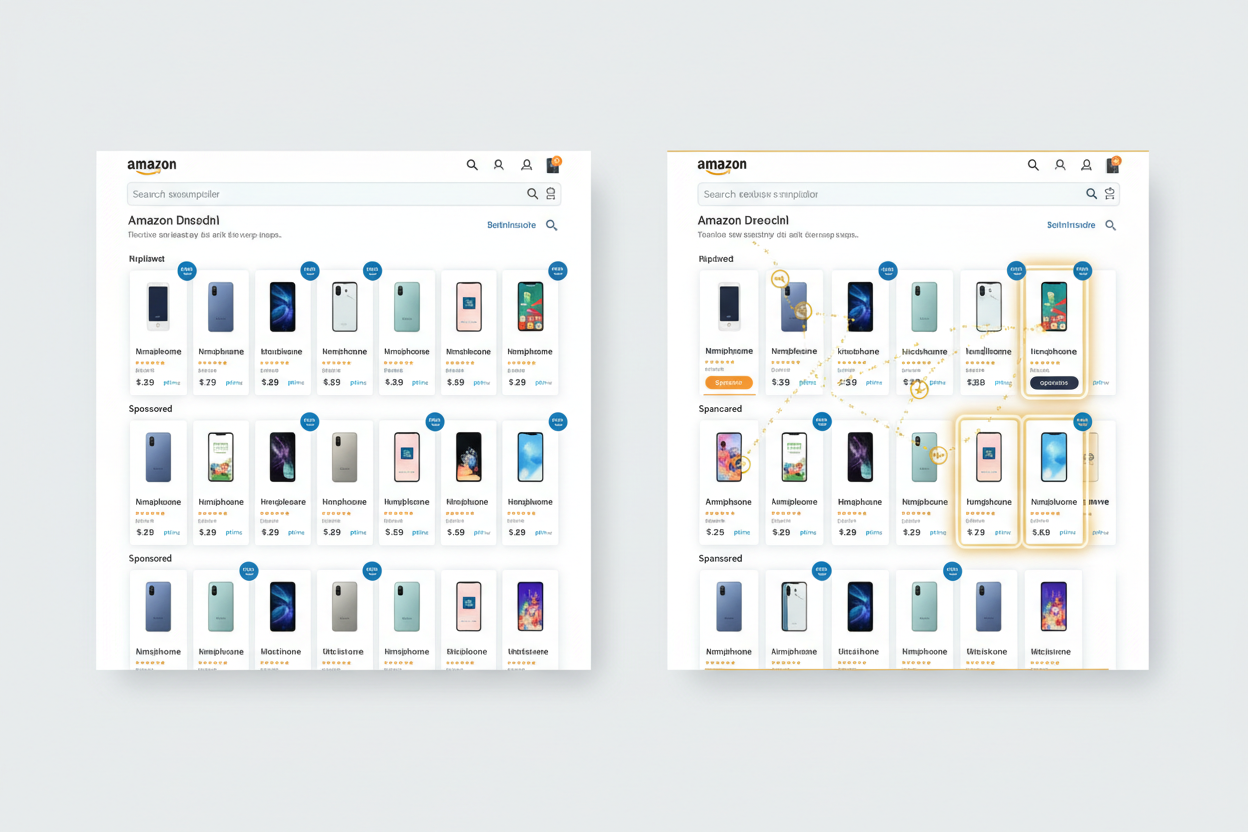
Amazon’s advertising platform operates on a pay-per-click (PPC) model, similar to Google Ads, but with a crucial difference: shoppers on Amazon are already in buying mode. They’re not just browsing—they’re hunting for products to purchase. This intent-driven environment makes Amazon advertising incredibly powerful for e-commerce businesses.
The platform serves ads across various placements, including search results, product detail pages, and even off-Amazon through the Amazon DSP (Demand-Side Platform). What makes this ecosystem particularly exciting is its integration with Amazon’s vast customer data, allowing for precise targeting that would make other platforms green with envy.
Types of Amazon Advertising Campaigns 📊
Amazon offers several advertising options, each designed for different goals and strategies. Let’s break them down:
Sponsored Products 🛍️
These are the bread and butter of Amazon advertising. Sponsored Products appear in search results and on product pages, looking almost identical to organic listings. They’re perfect for driving sales of individual products and are ideal for beginners because they’re relatively straightforward to set up and manage.
Sponsored Brands 🏷️
Think of these as your brand’s billboard on Amazon. Sponsored Brands showcase your logo, custom headline, and multiple products. They appear at the top of search results and are fantastic for building brand awareness and driving traffic to your brand store or specific product collections.
Sponsored Display 🎯
These ads reach customers both on and off Amazon, targeting shoppers based on their interests and shopping behaviors. Sponsored Display ads are excellent for retargeting customers who viewed your products but didn’t purchase, helping you stay top-of-mind throughout their buying journey.
Amazon DSP 📺
The premium option for larger advertisers, DSP allows you to buy display and video ads programmatically. While more complex and requiring higher minimum spends, DSP offers unparalleled reach and sophisticated targeting options.
Setting Up Your First Amazon Ad Campaign ⚙️
Ready to create your first campaign? Here’s your step-by-step roadmap:
First, access Amazon’s advertising console through Seller Central or Vendor Central. The interface might seem overwhelming initially, but don’t worry—we’ll walk through it together.
Start with Sponsored Products for your first campaign. Choose between automatic and manual targeting. Automatic targeting lets Amazon’s algorithm decide when to show your ads based on your product information, while manual targeting gives you complete control over keywords and targeting.
For beginners, I recommend starting with automatic targeting. It’s like having a knowledgeable friend guide you through a new city—Amazon’s algorithms will help you discover which keywords work best for your products. You can always refine your approach later with manual campaigns.
Set your daily budget conservatively. Remember, you can always increase it later, but starting small helps you learn without breaking the bank. A good rule of thumb is to start with $10-20 per day for individual products.
Keyword Research and Optimization Strategies 🔑
Keywords are the foundation of successful Amazon advertising. Think of them as the bridge connecting customer searches to your products.
Start by brainstorming how customers might search for your product. Put yourself in their shoes—what problems does your product solve? What features are most important? Don’t just think about obvious keywords; consider related terms, synonyms, and even common misspellings.
Use Amazon’s search bar autocomplete feature—it’s a goldmine of real customer search terms. Start typing your main keyword and watch what suggestions appear. These suggestions are based on actual customer searches, making them incredibly valuable.
Tools like Helium 10, Jungle Scout, or even Amazon’s own keyword planner can provide additional insights. Look for keywords with decent search volume but manageable competition. Sometimes, longer, more specific keywords (long-tail keywords) can be more profitable than broad, highly competitive terms.
Match types matter too. Broad match casts a wide net, phrase match requires your keywords to appear in order, and exact match shows ads only for that specific search term. Start broad and narrow down based on performance data.
Budget Management and Bidding Strategies 💰
Managing your advertising budget effectively can make the difference between profitable campaigns and money pits. Here’s how to approach it strategically:
Start with Amazon’s suggested bids as a baseline, but don’t treat them as gospel. These suggestions are based on competition levels, but they don’t account for your specific profit margins or business goals.
Implement a bid management strategy based on performance. Increase bids for keywords that convert well and decrease bids for those that don’t. It sounds simple, but this ongoing optimization is where the magic happens.
Consider dayparting—adjusting your bids based on the time of day or day of the week when your customers are most likely to purchase. You might find that your products sell better on weekends or during evening hours.
Don’t forget about your Advertising Cost of Sales (ACoS). This metric shows what percentage of your sales you’re spending on advertising. A good ACoS varies by industry and profit margins, but generally, you want it lower than your profit margin to maintain profitability.
Measuring Success: Key Metrics and Analytics 📈
Data is your best friend in Amazon advertising. The platform provides robust analytics, but knowing which metrics matter most can save you from analysis paralysis.
Click-through rate (CTR) indicates how compelling your ads are to shoppers. A low CTR might suggest your product images need improvement or your targeting is off. Conversion rate shows how many clicks turn into sales—this reflects your product page optimization and pricing competitiveness.
Return on Ad Spend (ROAS) is arguably the most important metric. It shows how much revenue you generate for every dollar spent on advertising. A ROAS of 4:1 means you’re making $4 for every $1 spent on ads.
Don’t ignore impression share—the percentage of times your ads appeared when they were eligible to show. Low impression share might indicate you need to increase bids or expand your keyword list.
Track these metrics weekly, not daily. Daily fluctuations are normal, but weekly trends reveal meaningful patterns that should guide your optimization decisions.
Advanced Amazon Advertising Techniques 🚀
Once you’ve mastered the basics, these advanced strategies can take your campaigns to the next level:
Negative keyword optimization is crucial for campaign efficiency. Add search terms that triggered your ads but didn’t convert as negative keywords to prevent future wasteful spending. It’s like pruning a garden—removing what doesn’t work helps the rest flourish.
Product targeting allows you to show ads on specific competitor product pages or complementary products. This strategy can be incredibly effective for capturing customers who are considering similar products.
Campaign structure optimization involves creating tightly themed ad groups with closely related keywords. This approach improves Quality Score and allows for more precise bid management.
Consider seasonal adjustments. Many products have seasonal demand patterns, and adjusting your advertising strategy accordingly can significantly improve performance during peak periods.
Common Mistakes to Avoid ⚠️
Learning from others’ mistakes is cheaper than making your own. Here are the most common pitfalls I see Amazon advertisers fall into:
Setting and forgetting campaigns is perhaps the biggest mistake. Amazon advertising requires ongoing optimization. Set aside time weekly to review performance and make adjustments.
Ignoring product page optimization is another costly error. Your ads might drive traffic, but if your product page doesn’t convert, you’re essentially paying for window shoppers. Ensure your images, titles, and descriptions are optimized before ramping up advertising spend.
Bidding too aggressively on broad keywords often leads to wasted spend. Start conservatively and increase bids gradually based on performance data.
Not using negative keywords effectively can drain budgets quickly. Regularly review search terms and add irrelevant ones as negatives.
Conclusion: Your Path to Amazon Advertising Success 🎯
Amazon advertising isn’t just about spending money and hoping for the best—it’s about strategic investment in your business growth. The platform offers incredible opportunities to reach customers at the exact moment they’re ready to buy, but success requires patience, testing, and continuous optimization.
Start small, learn from your data, and gradually scale what works. Remember, every successful Amazon advertiser started exactly where you are now. The difference between those who succeed and those who don’t isn’t luck—it’s persistence and willingness to learn from both successes and failures.
Your journey to Amazon advertising mastery begins with that first campaign. Don’t wait for the perfect strategy—start with a good one and improve along the way. Your future self (and your bank account) will thank you for taking action today! 💪
Frequently Asked Questions ❓
How much should I spend on Amazon advertising as a beginner?
Start with a modest daily budget of $10-20 per product. This allows you to gather performance data without significant financial risk. You can always increase your budget once you identify profitable campaigns.
How long does it take to see results from Amazon ads?
You’ll typically see initial data within 24-48 hours, but meaningful results usually take 2-4 weeks. Amazon’s algorithm needs time to optimize, and you need sufficient data to make informed decisions about campaign adjustments.
Should I use automatic or manual targeting for my first campaign?
Start with automatic targeting to discover which keywords work for your products. After 2-3 weeks, use the search term report to identify high-performing keywords and create manual campaigns for better control.
What’s a good ACoS (Advertising Cost of Sales) for my campaigns?
A good ACoS depends on your profit margins and business goals. Generally, aim for an ACoS that’s 50-70% of your profit margin. If your profit margin is 30%, target an ACoS of 15-21%.
Can I advertise on Amazon if I’m not selling on the platform?
Amazon DSP allows non-Amazon sellers to advertise, but most Amazon advertising options require you to sell products on the platform. Consider Amazon’s marketplace if you’re serious about leveraging their advertising ecosystem.
How often should I optimize my Amazon ad campaigns?
Review campaign performance weekly and make adjustments as needed. Daily monitoring can lead to hasty decisions based on insufficient data, while monthly reviews might miss important trends or opportunities for optimization.


