


Traffic Monetization: Turning Visitors into Revenue 💰
Table of Contents
1. Understanding Traffic Monetization Fundamentals
2. Essential Metrics That Matter for Revenue Generation
3. Proven Monetization Strategies That Actually Work
4. Optimizing Your Website for Maximum Revenue Conversion
5. Advanced Techniques for Scaling Your Revenue
6. Common Monetization Mistakes to Avoid
7. Tools and Platforms for Effective Traffic Monetization
8. Frequently Asked Questions
Introduction
You’ve built it, and they’ve come. Your website is attracting visitors, your analytics dashboard shows promising numbers, and you’re feeling pretty good about your online presence. But here’s the million-dollar question: are those visitors actually putting money in your pocket? 🤔
Traffic monetization isn’t just about slapping some ads on your site and hoping for the best. It’s an art and science that requires strategy, patience, and a deep understanding of your audience’s needs. Whether you’re a blogger with thousands of monthly visitors or an e-commerce site owner looking to boost conversions, this comprehensive guide will show you how to transform those clicks into cold, hard cash.
Let’s dive into the world of traffic monetization and discover how to turn your website visitors into a sustainable revenue stream that actually makes a difference to your bottom line.
Understanding Traffic Monetization Fundamentals
Traffic monetization is essentially the process of converting your website visitors into revenue through various methods and strategies. Think of it as the bridge between having an audience and having a business that actually pays the bills.
The beauty of traffic monetization lies in its versatility. You don’t need to be Amazon or Google to start generating meaningful revenue from your website traffic. Even a modest blog with a few thousand monthly visitors can create substantial income when the right strategies are implemented effectively.
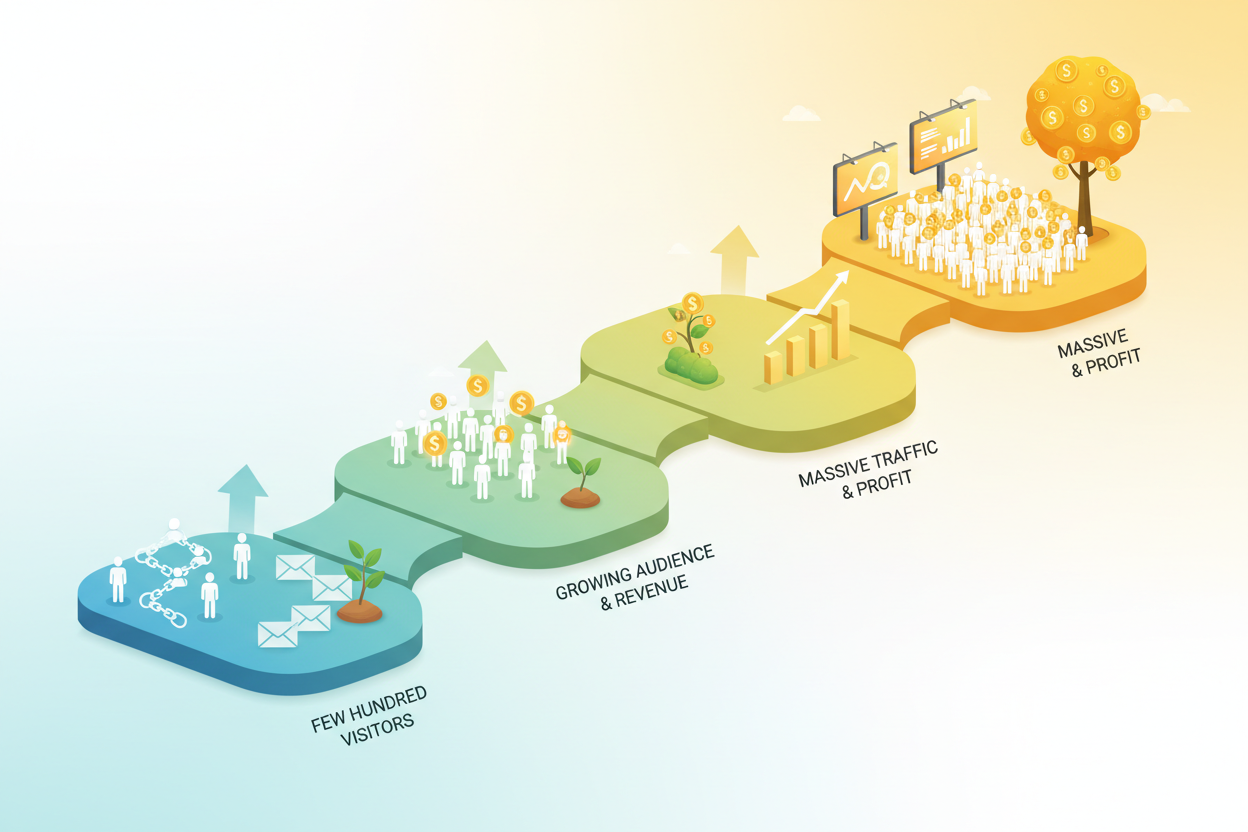
At its core, successful traffic monetization depends on three fundamental pillars: understanding your audience, providing genuine value, and choosing the right monetization methods that align with both your content and your visitors’ needs. It’s not about tricking people into spending money – it’s about creating win-win situations where your visitors get value and you get compensated for providing that value.
Essential Metrics That Matter for Revenue Generation 📊
Before we jump into monetization strategies, let’s talk numbers. You can’t improve what you don’t measure, and traffic monetization is no exception. Here are the key metrics that will guide your revenue optimization efforts:
Revenue Per Visitor (RPV) is perhaps the most crucial metric for understanding your monetization effectiveness. It’s calculated by dividing your total revenue by the number of unique visitors. This metric helps you understand the actual value each visitor brings to your business.
Conversion Rate tells you what percentage of your visitors are taking the desired action, whether that’s making a purchase, signing up for a newsletter, or clicking on an affiliate link. A 2-3% conversion rate is considered good for most industries, but this can vary significantly.
Average Order Value (AOV) is crucial if you’re selling products or services. Understanding how much money each converting visitor spends helps you optimize your pricing strategies and upselling opportunities.
Lifetime Value (LTV) looks beyond the initial conversion to understand how much revenue a customer generates over their entire relationship with your business. This metric is gold for planning long-term monetization strategies.
Proven Monetization Strategies That Actually Work 🚀
Now for the good stuff – let’s explore the monetization strategies that have proven successful across various industries and website types.
Affiliate Marketing remains one of the most popular and accessible monetization methods. By promoting products or services that align with your audience’s interests, you can earn commissions on sales without handling inventory or customer service. The key is authenticity – only promote products you genuinely believe in and that provide real value to your audience.
Display Advertising through platforms like Google AdSense can provide passive income, especially for high-traffic sites. While the revenue per visitor might be lower compared to other methods, the passive nature makes it attractive for content-heavy sites. However, be mindful of ad placement and density – too many ads can hurt user experience and actually decrease overall revenue.
Email Marketing consistently delivers the highest ROI among digital marketing channels. Building an email list allows you to nurture relationships with your visitors and promote relevant offers directly. The money truly is in the list, as they say, but only if you provide consistent value and avoid being overly promotional.
Digital Products and Courses offer excellent profit margins and scalability. Whether it’s an ebook, online course, or software tool, digital products can be created once and sold repeatedly. The key is identifying what knowledge or skills your audience values most and packaging that into a compelling offer.
Optimizing Your Website for Maximum Revenue Conversion 🎯
Having great monetization strategies means nothing if your website isn’t optimized for conversions. Your site’s design, user experience, and technical performance all play crucial roles in turning visitors into revenue.
Page Load Speed is absolutely critical. Studies show that a one-second delay in page load time can reduce conversions by 7%. Use tools like Google PageSpeed Insights to identify and fix speed issues. Remember, every second counts when it comes to keeping visitors engaged and moving them toward conversion.
Mobile Optimization isn’t optional anymore – it’s essential. With over 50% of web traffic coming from mobile devices, your monetization strategies must work seamlessly across all devices. This means responsive design, fast mobile loading times, and mobile-friendly checkout processes.
Clear Call-to-Actions (CTAs) guide visitors toward your desired actions. Whether it’s “Buy Now,” “Sign Up,” or “Learn More,” your CTAs should be prominent, compelling, and strategically placed throughout your site. Test different colors, text, and placements to find what works best for your audience.
Trust Signals like testimonials, reviews, security badges, and professional design elements help visitors feel confident about engaging with your monetization offers. People need to trust you before they’ll give you their money, so invest in building credibility.
Advanced Techniques for Scaling Your Revenue 📈
Once you’ve mastered the basics, it’s time to explore advanced techniques that can significantly boost your revenue per visitor.
Segmentation and Personalization allow you to deliver targeted offers to different visitor groups. A first-time visitor might see a welcome discount, while returning customers might see complementary product recommendations. Use data about visitor behavior, traffic sources, and demographics to create more relevant experiences.
Retargeting Campaigns help you re-engage visitors who left without converting. Since only 2-3% of visitors typically convert on their first visit, retargeting gives you additional opportunities to turn browsers into buyers. Facebook Pixel and Google Ads retargeting are powerful tools for this strategy.
Upselling and Cross-selling can dramatically increase your average order value. Amazon masters this with their “Customers who bought this also bought” recommendations. Look for natural opportunities to suggest complementary products or upgraded versions of what visitors are already interested in.
Exit-Intent Popups might seem annoying, but when done right, they can recover 10-15% of abandoning visitors. Offer a discount, free resource, or compelling reason to stay. The key is timing and value – make the offer too good to ignore.
Common Monetization Mistakes to Avoid ⚠️
Learning from others’ mistakes is much cheaper than making them yourself. Here are the most common traffic monetization pitfalls that can hurt your revenue and reputation.
Over-monetizing is probably the biggest mistake I see. Plastering your site with ads, affiliate links, and sales pitches creates a poor user experience and actually reduces conversions. Focus on providing value first, then monetize strategically.
Ignoring Mobile Users is leaving money on the table. If your monetization strategies don’t work well on mobile devices, you’re potentially losing half your revenue. Always test your offers and checkout processes on various devices and screen sizes.
Not Testing and Optimizing means you’re probably leaving significant revenue on the table. What works for one site might not work for another. Continuously test different approaches, measure results, and optimize based on data, not assumptions.
Promoting Irrelevant Products destroys trust and reduces long-term revenue potential. Just because a product has a high commission rate doesn’t mean you should promote it. Your recommendations should always align with your audience’s needs and interests.
Tools and Platforms for Effective Traffic Monetization 🛠️
The right tools can make the difference between struggling with monetization and scaling it successfully. Here are the essential platforms and tools that can help streamline your revenue generation efforts.
Google Analytics 4 provides deep insights into visitor behavior, conversion paths, and revenue attribution. Understanding where your most valuable traffic comes from helps you double down on what’s working and fix what isn’t.
Email Marketing Platforms like ConvertKit, Mailchimp, or AWeber are essential for building and nurturing your audience. These platforms offer automation features that can turn your email list into a consistent revenue stream.
A/B Testing Tools such as Optimizely or Google Optimize help you test different versions of your pages, offers, and CTAs to find what converts best. Small improvements in conversion rates can lead to significant revenue increases over time.
Affiliate Networks like ShareASale, Commission Junction, or Amazon Associates provide access to thousands of products you can promote. Choose networks that align with your niche and offer products your audience actually wants.
Conclusion
Traffic monetization isn’t about getting rich quick – it’s about building sustainable revenue streams that grow with your audience. The strategies and techniques we’ve covered in this guide have helped countless website owners transform their traffic into meaningful income.
Remember, successful monetization starts with understanding your audience and providing genuine value. Whether you choose affiliate marketing, digital products, advertising, or a combination of strategies, always prioritize your visitors’ experience and needs.
Start with one or two monetization methods, test and optimize them thoroughly, then gradually expand your revenue streams. With patience, persistence, and the right approach, you can turn your website traffic into a reliable income source that supports your goals and grows your business. 🌟
The journey from visitor to revenue isn’t always straightforward, but with the right strategies and tools, every click has the potential to contribute to your bottom line. Now it’s time to put these insights into action and start monetizing your traffic effectively!
Frequently Asked Questions
How much traffic do I need before I can start monetizing?
You can start monetizing with any amount of traffic, but different strategies work better at different traffic levels. Affiliate marketing and email list building can work with just a few hundred visitors per month, while display advertising typically requires thousands of monthly visitors to generate meaningful revenue.
What’s the average revenue per visitor for most websites?
Revenue per visitor varies dramatically by industry and monetization method. E-commerce sites might see $1-5 per visitor, while content sites with display ads might generate $0.01-0.10 per visitor. Focus on improving your own metrics rather than comparing to industry averages.
Should I use multiple monetization strategies or focus on one?
Start with one strategy, master it, then gradually add others. Multiple revenue streams can provide stability and higher overall revenue, but managing too many at once can dilute your efforts and reduce effectiveness.
How long does it take to see results from traffic monetization?
This depends on your strategy and implementation. Some methods like affiliate marketing can generate revenue within weeks, while building a successful email list or creating digital products might take several months to show significant results.
Is it better to have high traffic with low conversion or low traffic with high conversion?
High-converting traffic is generally more valuable than high-volume, low-converting traffic. Focus on attracting qualified visitors who are genuinely interested in what you offer, rather than just chasing traffic numbers.


