


Voice Search Optimization: The New Frontier of Traffic 🚀
Table of Contents
1. Introduction: The Rise of Voice Search
2. Understanding Voice Search Behavior
3. Key Differences Between Text and Voice Search
4. Essential Voice Search Optimization Strategies
5. Technical Implementation for Voice Search
6. Measuring Voice Search Success
7. Future Trends in Voice Search Technology
8. Common Voice Search Optimization Mistakes
9. Conclusion
10. Frequently Asked Questions
Introduction: The Rise of Voice Search 📱
Picture this: you’re cooking dinner, hands covered in flour, and suddenly need to know the conversion rate from cups to ounces. Instead of washing your hands and typing on your phone, you simply ask, “Hey Google, how many ounces are in a cup?” This scenario plays out millions of times daily across households worldwide, marking a fundamental shift in how we interact with search engines.
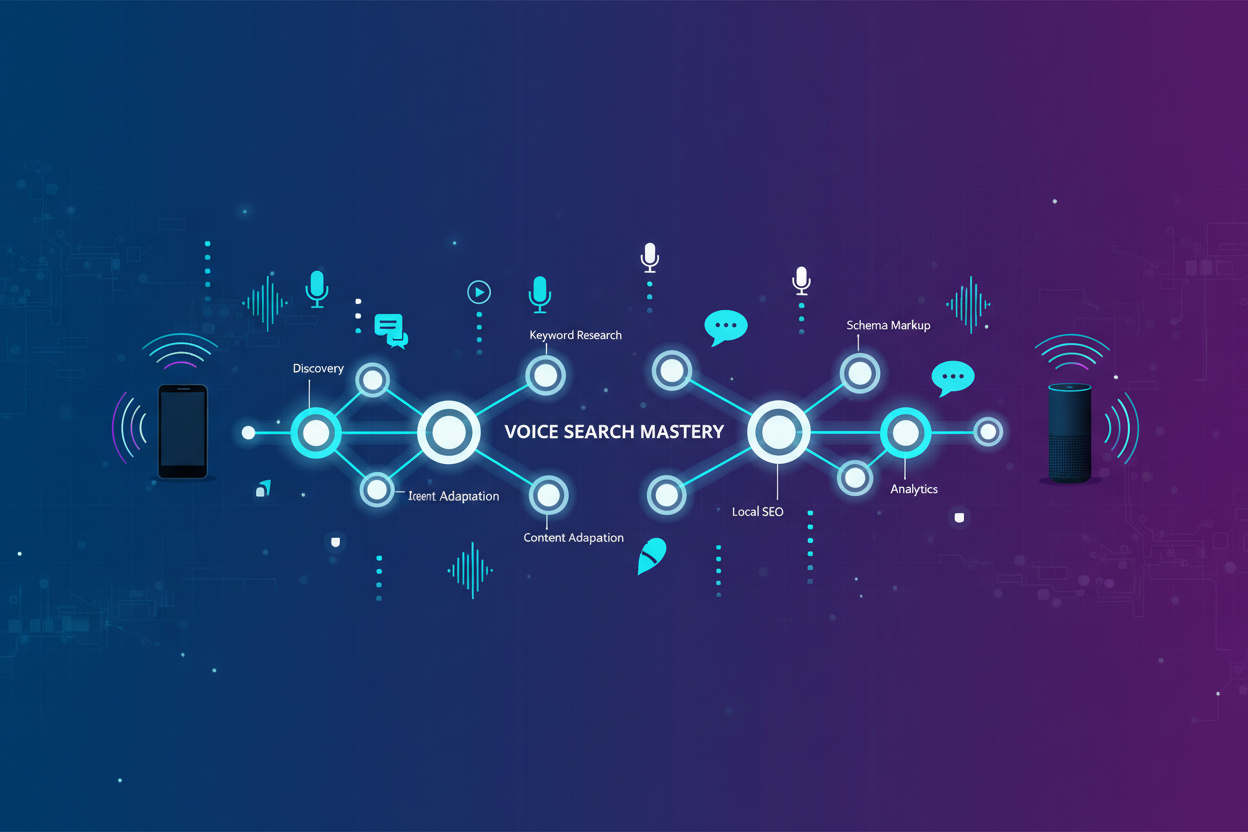
Voice search has evolved from a novelty feature to an essential part of our digital ecosystem. With over 4.2 billion voice assistants in use globally as of 2023, businesses can no longer afford to ignore this growing trend. The statistics are staggering: 55% of adults use voice search daily, and by 2024, experts predict that voice commerce will reach $40 billion in the United States alone.
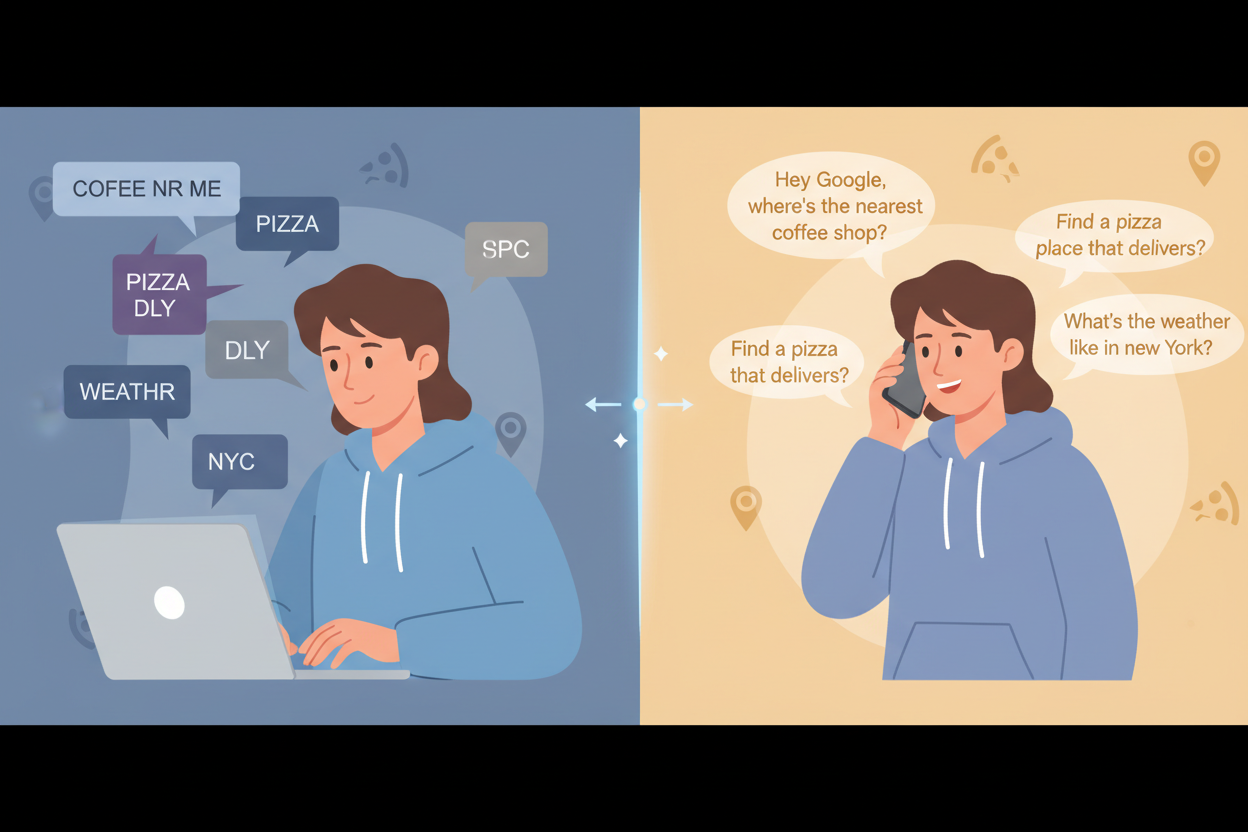
But here’s the thing – voice search optimization isn’t just about keeping up with technology trends. It’s about meeting your customers where they are and how they naturally communicate. When someone types a query, they might search for “best pizza NYC.” When they speak that same query, they’re more likely to ask, “What’s the best pizza place near me?” This shift requires a complete rethinking of SEO strategies.
Understanding Voice Search Behavior 🎯
Voice search behavior differs dramatically from traditional text-based searches, and understanding these differences is crucial for optimization success. When people use voice search, they’re typically looking for immediate, actionable information. They want quick answers to specific questions, local business information, or help with immediate tasks.
The psychology behind voice search reveals fascinating insights. Users feel more comfortable speaking naturally and conversationally to their devices, leading to longer, more specific queries. While a typed search might be “weather forecast,” a voice search becomes “What’s the weather going to be like tomorrow morning?” This natural language pattern creates opportunities for businesses to capture highly targeted, intent-driven traffic.
Mobile usage dominates voice search, with 58% of consumers using voice search to find local business information on their smartphones. This mobile-first behavior means users are often on-the-go, seeking immediate solutions or nearby services. They’re not browsing leisurely; they need answers now.
Key Differences Between Text and Voice Search 🔍
The fundamental differences between text and voice search extend far beyond the input method. Voice searches are typically 3-5 times longer than text searches, averaging 4.2 words compared to 1.2 words for typed queries. This length difference stems from natural speech patterns – we speak in complete sentences and questions rather than keyword fragments.
Question-based queries dominate voice search. Words like “who,” “what,” “where,” “when,” “why,” and “how” appear in 74% of voice searches. Users frame their needs as questions because speaking feels like having a conversation with a knowledgeable assistant. This conversational approach requires content that directly answers these question formats.
Local intent appears in 46% of voice searches daily. People frequently ask for nearby restaurants, stores, services, or directions. The immediacy of voice search often correlates with immediate local needs, making local SEO optimization crucial for voice search success.
Speed expectations also differ significantly. Voice search users expect instant responses – ideally within 2-3 seconds. This expectation puts pressure on websites to load quickly and provide immediately accessible information. The patience threshold for voice search is much lower than traditional search browsing.
Essential Voice Search Optimization Strategies 💡
Successful voice search optimization starts with understanding and implementing conversational keywords. Instead of targeting short, choppy keywords like “Italian restaurant,” focus on natural phrases like “Where can I find authentic Italian food near me?” These longer, conversational keywords better match how people actually speak to their devices.
Featured snippets represent the holy grail of voice search optimization. When voice assistants answer questions, they typically pull information from featured snippets – those highlighted answer boxes that appear at the top of search results. To capture these snippets, structure your content to directly answer common questions in your industry. Use clear, concise language and format answers in easily digestible paragraphs.
Creating comprehensive FAQ sections has become essential for voice search success. Think about every possible question your customers might ask about your products, services, or industry. Then create detailed, conversational answers that sound natural when read aloud. These FAQ sections often become goldmines for capturing voice search traffic.
Local business optimization takes on heightened importance for voice search. Ensure your Google My Business listing is complete, accurate, and regularly updated. Include detailed business information, high-quality photos, current hours, and encourage customer reviews. Voice searches for local businesses often result in immediate actions like phone calls or visits, making this optimization crucial for conversion.
Technical Implementation for Voice Search 🛠️
Schema markup becomes your technical foundation for voice search optimization. This structured data helps search engines understand your content context and increases the likelihood of appearing in voice search results. Implement FAQ schema, local business schema, and article schema to provide clear signals about your content’s purpose and structure.
Page loading speed directly impacts voice search performance. Voice search users expect immediate responses, making site speed optimization crucial. Aim for loading times under 3 seconds, optimize images, minimize HTTP requests, and consider implementing Accelerated Mobile Pages (AMP) for content-heavy pages. Every second of loading time can significantly impact your voice search visibility.
Mobile optimization isn’t optional for voice search success – it’s mandatory. Since most voice searches occur on mobile devices, ensure your website provides an exceptional mobile experience. Implement responsive design, optimize for touch interactions, and ensure all content is easily accessible on smaller screens.
Natural language processing optimization involves structuring content to match conversational patterns. Use headers that mirror common questions, write in active voice, and maintain a conversational tone throughout your content. The goal is creating content that sounds natural when read aloud by voice assistants.
Measuring Voice Search Success 📊
Tracking voice search performance requires looking beyond traditional SEO metrics. While direct voice search analytics remain limited, several indicators can help measure your optimization success. Monitor increases in long-tail keyword rankings, particularly question-based queries and conversational phrases.
Featured snippet appearances provide valuable insight into voice search performance. Track how often your content appears in featured snippets, as these positions often translate to voice search answers. Use tools like SEMrush or Ahrefs to monitor featured snippet performance and identify optimization opportunities.
Local search performance metrics become crucial for businesses with physical locations. Monitor increases in “near me” searches, local pack appearances, and Google My Business insights. These metrics often correlate with voice search success, especially for location-based queries.
Engagement metrics can reveal voice search impact. Users arriving through voice search often exhibit different behavior patterns – they may have higher bounce rates if they found their answer quickly, or longer session durations if they explored further. Analyze these patterns to understand how voice search affects user behavior on your site.
Future Trends in Voice Search Technology 🔮
The future of voice search promises exciting developments that will reshape digital marketing strategies. Artificial intelligence and machine learning continue improving voice recognition accuracy and natural language understanding. These advances will enable more complex, multi-part conversations with voice assistants, creating opportunities for deeper customer engagement.
Visual voice search represents an emerging frontier where users can combine voice commands with visual elements. Imagine asking, “What’s this product and where can I buy it?” while pointing your phone’s camera at an item. This technology will create new optimization challenges and opportunities for businesses.
Smart home integration will expand voice search beyond mobile devices. As smart speakers, displays, and IoT devices become more prevalent, voice search will become embedded in daily routines. This expansion will create new touchpoints for businesses to connect with customers throughout their day.
Personalization in voice search will become increasingly sophisticated. Voice assistants will better understand individual user preferences, search history, and context, delivering more personalized results. This evolution will require businesses to create more diverse, comprehensive content to match various user intents and preferences.
Common Voice Search Optimization Mistakes ❌
Many businesses make the mistake of simply adding long-tail keywords without considering natural speech patterns. Effective voice search optimization requires understanding how people actually speak, not just extending keyword lists. Focus on creating content that sounds natural when spoken aloud, not forced keyword combinations.
Ignoring local optimization represents a significant missed opportunity. Even businesses without physical locations can benefit from local voice search optimization. Consider how your products or services might relate to local searches and optimize accordingly. Local intent appears in nearly half of all voice searches, making this optimization crucial for most businesses.
Overlooking page speed optimization can devastate voice search performance. Voice search users expect immediate responses, and slow-loading pages rarely satisfy these expectations. Regularly test and optimize your site speed, particularly on mobile devices where most voice searches occur.
Failing to create conversational content represents another common pitfall. Many businesses continue writing for text-based search without adapting their tone and structure for voice search. Content should sound natural when read aloud and directly answer the questions users are likely to ask.
Conclusion 🎯
Voice search optimization represents more than just another SEO tactic – it’s a fundamental shift toward more natural, conversational interactions between businesses and customers. As voice technology becomes increasingly sophisticated and widespread, businesses that embrace this change will gain significant competitive advantages.
The key to voice search success lies in understanding that people speak differently than they type. They use natural language, ask complete questions, and expect immediate, relevant answers. By optimizing for these behavioral patterns, businesses can capture highly targeted traffic from users with clear intent and immediate needs.
Success in voice search optimization requires a holistic approach combining technical implementation, content strategy, and user experience optimization. It’s not enough to simply add question-based keywords; you must create comprehensive, conversational content that genuinely helps users while meeting technical requirements for voice search visibility.
As we look toward the future, voice search will only become more integral to how people access information and interact with businesses. The businesses that invest in voice search optimization today are positioning themselves for sustained success in an increasingly voice-driven digital landscape. The question isn’t whether voice search will impact your business – it’s whether you’ll be ready when it does. 🚀
Frequently Asked Questions 🤔
What percentage of searches will be voice-based by 2025?
Industry experts predict that voice searches will account for 50% of all searches by 2025. This dramatic increase is driven by improving voice recognition technology, increased smart device adoption, and changing user behavior patterns, particularly among younger demographics.
How long should content be for voice search optimization?
Voice search answers typically range from 29-35 words, with the average being around 29 words. However, the content supporting these answers should be comprehensive. Create detailed content that thoroughly covers topics while including concise, direct answers that voice assistants can easily extract.
Do I need a mobile app for voice search optimization?
No, a mobile app isn’t necessary for voice search optimization. Most voice searches pull results from web content, not apps. Focus on optimizing your website for mobile devices and creating content that answers voice search queries. However, if you have an app, consider implementing voice search functionality within it for enhanced user experience.
Which voice assistants should I optimize for?
Optimize for all major voice assistants including Google Assistant, Amazon Alexa, Apple’s Siri, and Microsoft Cortana. While optimization techniques are similar across platforms, each has slight differences in how they process and present information. Google Assistant dominates mobile voice search, while Alexa leads in smart home devices.
How does voice search affect local SEO?
Voice search significantly amplifies the importance of local SEO. Nearly 58% of consumers use voice search to find local business information. Ensure your Google My Business listing is optimized, maintain consistent NAP (Name, Address, Phone) information across all platforms, and create content targeting local voice search queries like “near me” searches.
Can voice search work for B2B businesses?
Absolutely! B2B voice search optimization focuses on industry-specific questions, technical inquiries, and professional research queries. Business professionals use voice search for quick information gathering, competitor research, and finding solutions to workplace challenges. Create content addressing common B2B questions and industry terminology.


