


Local SEO Traffic: Dominating Your Geographic Market 🎯
Table of Contents
1. Introduction: Why Local SEO Matters More Than Ever
2. Understanding Local SEO Fundamentals
3. Google My Business: Your Local SEO Foundation
4. Local Keyword Research and Optimization
5. Building Local Citations and NAP Consistency
6. Online Reviews: The Trust Factor
7. Local Link Building Strategies
8. Mobile Optimization for Local Searches
9. Content Marketing for Local Audiences
10. Measuring Local SEO Success
11. Common Local SEO Mistakes to Avoid
12. Conclusion: Your Path to Local Market Dominance
13. Frequently Asked Questions
Introduction: Why Local SEO Matters More Than Ever 🌍
Picture this: You’re craving authentic Italian food on a Friday night, so you grab your phone and search “best Italian restaurant near me.” Within seconds, Google serves up a list of nearby options, complete with ratings, photos, and directions. This scenario plays out millions of times daily, and if your business isn’t showing up in these local searches, you’re missing out on a goldmine of potential customers.
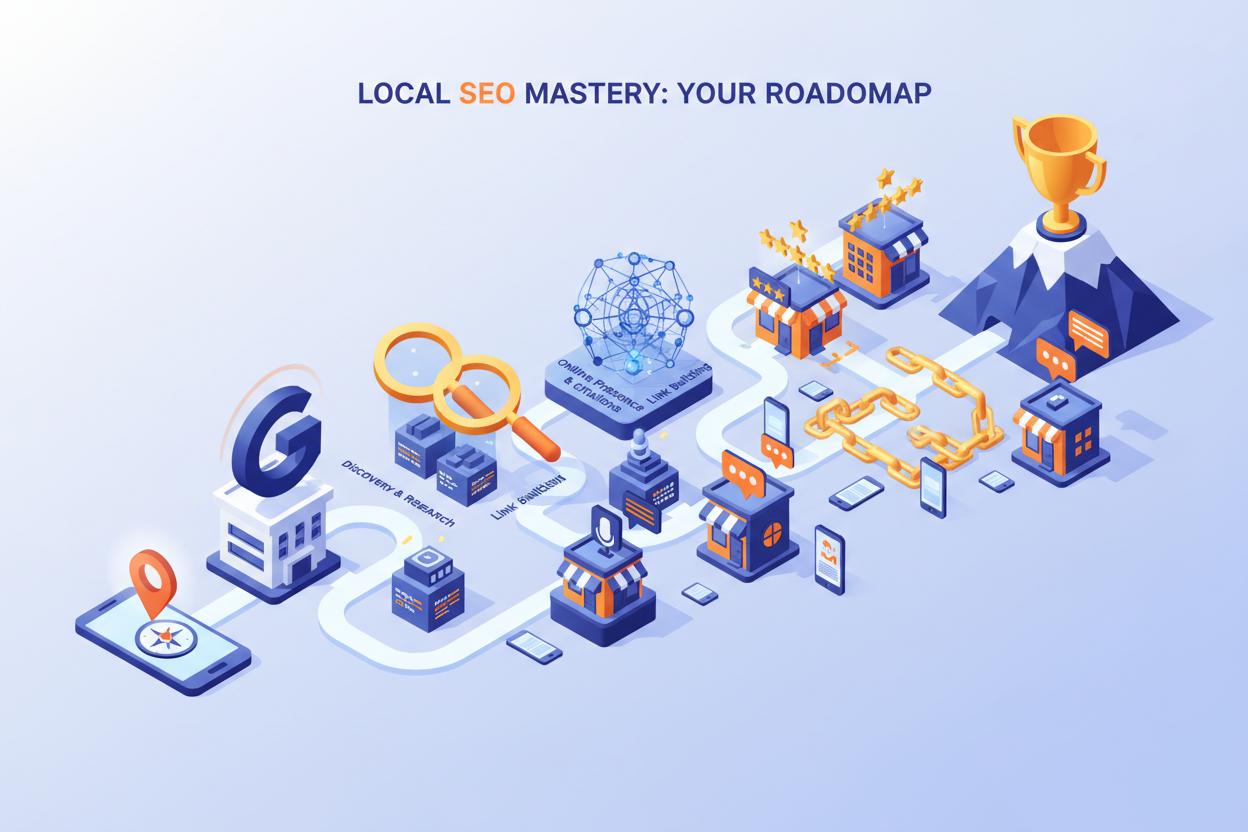
Local SEO has become the digital equivalent of prime real estate. It’s not just about being online anymore – it’s about being found by the right people at the right time in the right place. With 46% of all Google searches seeking local information and 76% of people who search for something nearby visiting a business within a day, mastering local SEO isn’t optional – it’s essential for survival in today’s competitive marketplace.
Whether you’re a cozy coffee shop, a bustling dental practice, or a home services company, this comprehensive guide will walk you through proven strategies to dominate your local market and turn geographic proximity into your biggest competitive advantage.

Understanding Local SEO Fundamentals 📚
Local SEO is like traditional SEO’s location-aware cousin. While regular SEO focuses on ranking for broad, national keywords, local SEO targets geographically-specific searches. It’s the difference between ranking for “pizza delivery” (national) and “pizza delivery downtown Chicago” (local).
The magic happens when search engines understand three critical factors: relevance, distance, and prominence. Relevance measures how well your business matches what someone’s searching for. Distance considers how close you are to the searcher or their specified location. Prominence evaluates how well-known and trusted your business is, both online and offline.
Think of local SEO as your digital neighborhood presence. Just as you’d want to be the go-to business that everyone in your area knows and trusts, local SEO helps you achieve that same recognition in the digital realm. It’s about becoming the obvious choice when locals need what you offer.
Google My Business: Your Local SEO Foundation 🏗️
If local SEO were a house, Google My Business (GMB) would be the foundation. It’s absolutely crucial, and getting it wrong can undermine everything else you do. Your GMB profile is often the first impression potential customers have of your business, so let’s make it count.
Start by claiming and verifying your listing – this simple step puts you ahead of countless businesses that haven’t bothered. Then, fill out every single field available. I’m talking business name, address, phone number, website, hours, categories, and description. Google rewards complete profiles, and customers trust businesses that provide comprehensive information.
Photos are your secret weapon here. Businesses with photos receive 42% more requests for directions and 35% more click-throughs to their websites. Upload high-quality images of your storefront, interior, products, team, and customers in action. Keep them fresh and updated – think of your GMB profile as a living, breathing representation of your business.
Don’t forget about Google Posts, either. These mini-updates appear directly in your business listing and help keep your profile active and engaging. Share news, promotions, events, or simply showcase what makes your business special. Regular posting signals to Google that your business is active and engaged with customers.
Local Keyword Research and Optimization 🔍
Here’s where many businesses stumble – they optimize for keywords nobody actually searches for. Effective local keyword research starts with understanding how your customers think and speak about your services, not how you describe them internally.
Begin with seed keywords related to your business, then add geographic modifiers. If you’re a plumber in Austin, you’re not just targeting “plumber” – you want “plumber Austin,” “emergency plumber Austin Texas,” “24-hour plumber near me,” and dozens of variations. Tools like Google Keyword Planner, Ahrefs, or even Google’s autocomplete suggestions can reveal what people actually search for.
But here’s the insider tip: pay attention to conversational keywords. With voice search growing rapidly, people are asking questions like “Where can I find a good mechanic nearby?” rather than typing “auto repair shop.” Optimize for these natural language patterns, and you’ll capture traffic your competitors miss.
Incorporate these keywords naturally throughout your website – in page titles, headers, meta descriptions, and content. But remember, you’re writing for humans first, search engines second. If your content reads like a keyword-stuffed mess, visitors will bounce faster than you can say “local search ranking.”
Building Local Citations and NAP Consistency 📍
NAP stands for Name, Address, and Phone number – and consistency here is absolutely critical. Think of citations as digital references that vouch for your business’s legitimacy. When search engines see your business information listed consistently across multiple reputable sites, it builds trust and authority.
Start with the major directories: Google My Business, Bing Places, Apple Maps, Facebook, and Yelp. Then expand to industry-specific directories. If you’re a restaurant, get listed on OpenTable and Zomato. If you’re a contractor, focus on Angie’s List and HomeAdvisor. The key is choosing quality over quantity – 20 consistent, high-authority citations beat 100 inconsistent, low-quality ones.
Here’s where attention to detail pays off: ensure your business name, address, and phone number are identical across all platforms. Even small discrepancies like “St.” versus “Street” or including/excluding suite numbers can confuse search engines and dilute your local SEO efforts.
Consider using citation management tools like Moz Local or BrightLocal to monitor and maintain consistency across platforms. These tools can save you hours of manual work and alert you to any inconsistencies that need fixing.
Online Reviews: The Trust Factor ⭐
Reviews are the digital age’s word-of-mouth marketing, and they carry serious weight in local search rankings. Google considers review quantity, quality, and recency when determining local search positions. But beyond SEO benefits, reviews directly influence customer decisions – 88% of consumers trust online reviews as much as personal recommendations.
The key isn’t just getting reviews; it’s getting quality reviews consistently. Develop a systematic approach to requesting feedback from satisfied customers. This might be a follow-up email after service completion, a gentle ask during checkout, or even QR codes on receipts linking to your review profiles.
When reviews do come in – both positive and negative – respond professionally and promptly. Thank customers for positive feedback and address concerns in negative reviews constructively. This shows potential customers that you care about their experience and are committed to continuous improvement.
Don’t try to game the system with fake reviews. Google’s algorithms are sophisticated enough to detect artificial patterns, and the penalties aren’t worth the temporary boost. Focus on delivering exceptional service that naturally generates positive feedback.
Local Link Building Strategies 🔗
Link building for local SEO requires a different approach than national campaigns. You’re not trying to get links from massive, international websites – you want relevant, local authority sites linking to your business.
Start with local partnerships and relationships. Sponsor a little league team, participate in community events, or collaborate with complementary businesses. These activities often result in natural link opportunities from local news sites, event pages, and partner websites.
Local media outlets are goldmines for link building. Develop relationships with local journalists and bloggers. Offer expert commentary on industry trends, share interesting business stories, or provide valuable community insights. When you become a go-to local source, links follow naturally.
Don’t overlook local business associations, chambers of commerce, and professional organizations. Membership often includes directory listings with valuable local links. Plus, these connections can lead to referrals and additional business opportunities beyond SEO benefits.
Mobile Optimization for Local Searches 📱
Here’s a statistic that should grab your attention: 61% of mobile searchers are more likely to contact a local business if they have a mobile-friendly site. With “near me” searches growing over 500% in recent years, mobile optimization isn’t just important – it’s make-or-break for local businesses.
Start with site speed. Mobile users are impatient, and Google knows it. Use tools like Google PageSpeed Insights to identify and fix speed issues. Compress images, minimize code, and consider a content delivery network (CDN) to serve your site faster to users regardless of location.
Your website must be responsive, meaning it adapts seamlessly to different screen sizes. But go beyond basic responsiveness – optimize for mobile user behavior. Make your phone number clickable, ensure your address links to maps, and place your most important information (contact details, hours, location) prominently above the fold.
Consider implementing Accelerated Mobile Pages (AMP) for key landing pages. While AMP adoption has slowed, it can still provide speed advantages that improve user experience and search rankings, especially for content-heavy pages like blog posts or service descriptions.
Content Marketing for Local Audiences 📝
Generic content doesn’t cut it in local SEO. Your content strategy should reflect your community’s interests, concerns, and characteristics. This means going beyond basic service pages to create content that truly resonates with local audiences.
Develop location-specific content that showcases your local expertise. Write about local events, community issues, or area-specific challenges your business helps solve. If you’re a landscaper in Phoenix, create content about desert gardening, drought-resistant plants, or preparing landscapes for extreme heat.
Local news and trend commentary can position you as a community thought leader. Share insights about how national trends affect your local market, or provide expert perspective on local developments. This type of content often gets shared locally and can attract links from local media outlets.
Don’t forget about user-generated content. Encourage customers to share photos, stories, or experiences related to your business. Feature local customers in case studies or testimonials. This content feels authentic and helps other locals envision themselves as your customers.
Measuring Local SEO Success 📊
You can’t improve what you don’t measure, and local SEO success requires tracking the right metrics. Start with Google My Business Insights, which shows how customers find your listing, what actions they take, and how your performance changes over time.
Track local search rankings for your target keywords using tools like BrightLocal or SEMrush. Monitor not just your position, but also which competitors appear in results and how the local pack (the map results) changes over time.
Website analytics reveal crucial insights about local traffic. Set up location-based segments in Google Analytics to understand how local visitors behave differently from broader traffic. Pay attention to metrics like local conversion rates, bounce rates, and the customer journey from local search to conversion.
Don’t overlook offline metrics either. Track phone calls, in-store visits, and conversions that originate from online local searches. Many local SEO efforts drive offline actions, so connect digital efforts to real-world results whenever possible.
Common Local SEO Mistakes to Avoid ❌
Even well-intentioned businesses make local SEO mistakes that hurt their visibility. One of the biggest errors is inconsistent NAP information across platforms. This confusion signals to search engines that your business information might be unreliable.
Another common mistake is choosing the wrong Google My Business categories. Your primary category should precisely match your main business focus, not what you wish you were known for. Accurate categorization helps Google understand when to show your business in relevant searches.
Many businesses also neglect their Google My Business posting and engagement. An inactive profile suggests an inactive business, which doesn’t inspire customer confidence or search engine favor. Regular updates, responses to reviews, and fresh content keep your profile vibrant and engaging.
Finally, avoid the temptation to stuff location keywords unnaturally into your content. “Best pizza restaurant in downtown Chicago Illinois near Millennium Park Chicago” doesn’t read naturally and can actually hurt your rankings. Focus on creating helpful, readable content that naturally incorporates location terms.
Conclusion: Your Path to Local Market Dominance 🚀
Dominating your local market through SEO isn’t about overnight success – it’s about consistent, strategic efforts that build authority and trust over time. The businesses that win in local search are those that understand their community, provide genuine value, and maintain a strong, consistent online presence.
Start with the fundamentals: claim and optimize your Google My Business profile, ensure NAP consistency across all platforms, and build a mobile-friendly website optimized for local keywords. Then layer on advanced strategies like local content marketing, community engagement, and systematic review generation.
Remember, local SEO is ultimately about connecting with your neighbors in the digital space. When you focus on genuinely serving your local community – both online and offline – the rankings, traffic, and customers will follow naturally. Your geographic location isn’t just where you do business; it’s your competitive advantage in an increasingly digital world.
The opportunity is massive, and the competition is still figuring it out. By implementing these strategies consistently and authentically, you’ll not just participate in your local market – you’ll dominate it. 💪
Frequently Asked Questions 🤔
How long does it take to see results from local SEO efforts?
Local SEO results typically begin showing within 3-6 months, with significant improvements visible after 6-12 months of consistent effort. However, some changes like Google My Business optimization can show results within weeks.
Is local SEO worth it for service-based businesses that travel to customers?
Absolutely! Even service businesses benefit from local SEO by targeting their service areas. Optimize for “service area” keywords and create location-specific pages for each area you serve.
How important are online reviews for local SEO rankings?
Reviews are crucial for local SEO, accounting for approximately 15% of ranking factors. They also significantly influence customer decisions, making them important for both visibility and conversions.
Can I do local SEO myself, or do I need to hire an agency?
Many local SEO tasks can be handled in-house, especially for smaller businesses. However, larger businesses or those in competitive markets often benefit from professional expertise to maximize results.
What’s the difference between local SEO and regular SEO?
Local SEO focuses on geographic-specific searches and local ranking factors like Google My Business, citations, and proximity. Regular SEO targets broader, non-location-specific keywords and ranking factors.
How many citations do I need for effective local SEO?
Quality matters more than quantity. Focus on 15-20 high-quality, consistent citations from authoritative directories rather than hundreds of low-quality listings.


