


The Science of Ad Frequency: Finding the Sweet Spot for Traffic 📊
Table of Contents
• What is Ad Frequency and Why Does It Matter?
• The Psychology Behind Ad Frequency
• The Goldilocks Zone: Not Too Little, Not Too Much
• Platform-Specific Frequency Guidelines
• Measuring Ad Frequency Performance
• Signs Your Ad Frequency is Off Track
• Advanced Strategies for Frequency Optimization
• Real-World Case Studies
• Tools and Technologies for Frequency Management
• Future Trends in Ad Frequency Optimization
• Frequently Asked Questions
• Conclusion
Have you ever wondered why some ads seem to follow you everywhere, while others disappear after just one impression? 🤔 There’s actually a fascinating science behind how often your audience sees your advertisements, and getting it right can make or break your campaign performance.
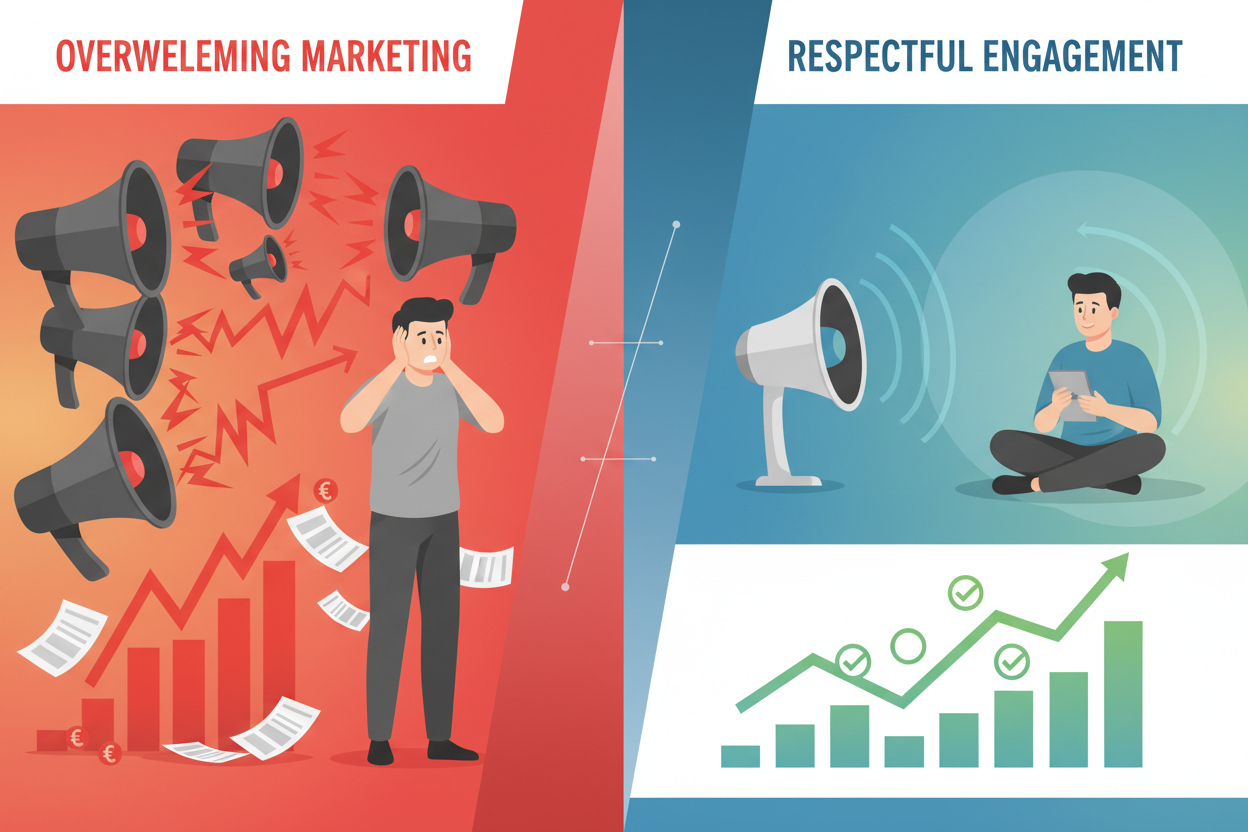
I’ve spent years analyzing campaign data, and I can tell you that ad frequency is one of the most underestimated factors in digital marketing success. It’s like seasoning in cooking – too little and your message gets lost in the noise, too much and you’ll leave a bad taste in your audience’s mouth.
What is Ad Frequency and Why Does It Matter? 🎯
Ad frequency refers to the average number of times a unique user sees your advertisement within a specific time period. Think of it as your digital marketing heartbeat – it needs to be steady and purposeful to keep your campaigns alive and thriving.
When I first started running campaigns, I made the classic mistake of thinking “more is better.” Boy, was I wrong! I watched conversion rates plummet and costs skyrocket because I was bombarding my audience with the same message over and over again. That’s when I learned that frequency isn’t just about reach – it’s about respect for your audience’s attention.
The importance of optimal ad frequency extends beyond just avoiding annoyance. It directly impacts your return on ad spend (ROAS), click-through rates (CTR), and overall campaign effectiveness. Research shows that the right frequency can increase brand recall by up to 70%, while excessive frequency can decrease it by 40%.
The Psychology Behind Ad Frequency 🧠
Understanding the psychological impact of ad frequency is crucial for any marketer worth their salt. The human brain processes repeated information through what psychologists call the “mere exposure effect” – we tend to develop preferences for things we’re familiar with, but only to a point.
There’s a beautiful curve that describes this relationship. Initially, as frequency increases, so does brand awareness and consideration. Your audience starts to recognize your brand, remember your message, and build trust. This is the sweet spot where magic happens – people begin to see you as a credible, established presence in their digital world.
However, push beyond this optimal zone, and you’ll trigger what I like to call the “digital eye-roll effect.” 🙄 Your audience becomes irritated, starts actively avoiding your ads, and may even develop negative associations with your brand. I’ve seen campaigns where excessive frequency led to a 300% increase in negative brand sentiment – ouch!
The Goldilocks Zone: Not Too Little, Not Too Much ⚖️
So what’s the magic number? Well, like most things in marketing, it depends. However, extensive research and my own experience have revealed some general guidelines that work across most industries and platforms.
For awareness campaigns, a frequency of 3-5 impressions per week typically yields optimal results. This gives your audience enough exposure to remember your brand without feeling overwhelmed. I’ve found this particularly effective for B2B campaigns where decision-making cycles are longer.
Conversion-focused campaigns often perform best with slightly higher frequencies – around 5-8 impressions per week. The urgency of driving action justifies the increased exposure, but you still need to be careful not to cross into annoyance territory.
Retargeting campaigns can handle even higher frequencies, sometimes up to 10-15 impressions per week, because you’re targeting people who have already shown interest in your brand. These users are more tolerant of your messages and closer to making a purchase decision.
Platform-Specific Frequency Guidelines 📱
Each advertising platform has its own frequency sweet spots, and understanding these nuances can significantly improve your campaign performance. Let me share what I’ve learned from managing campaigns across different channels.
Facebook and Instagram tend to work best with frequencies between 1.8-3.0 per week. The social nature of these platforms means users are more receptive to brand messages, but they’re also quick to hide or report ads that feel too pushy. I always monitor frequency closely on these platforms because user behavior can change rapidly.
Google Ads, particularly for search campaigns, can handle higher frequencies since users are actively looking for solutions. Display campaigns on the Google Network typically perform well with frequencies of 3-6 per week, while YouTube ads can go slightly higher due to their engaging video format.
LinkedIn, being a professional platform, requires a more conservative approach. I’ve found that frequencies above 2.5 per week often lead to decreased performance, as users are more focused on professional content and less tolerant of interruptions.
Measuring Ad Frequency Performance 📈
You can’t manage what you don’t measure, and ad frequency is no exception. The key is establishing the right metrics and monitoring them consistently. I’ve developed a framework that focuses on both leading and lagging indicators.
Click-through rate (CTR) is often the first metric to show frequency fatigue. When CTR starts declining while frequency increases, it’s a clear signal that your audience is becoming less engaged. I typically see this happen when frequency exceeds 4-5 impressions per week on most platforms.
Cost per acquisition (CPA) is another crucial metric. As frequency increases beyond the optimal range, CPA usually rises because you’re paying for impressions that don’t convert. I’ve seen cases where a frequency increase from 3 to 6 resulted in a 150% increase in CPA – definitely not what we want! 💸
Brand lift studies, while more complex to implement, provide valuable insights into how frequency affects brand perception. These studies can reveal the exact point where increased exposure starts hurting rather than helping your brand image.
Signs Your Ad Frequency is Off Track 🚨
Recognizing the warning signs of frequency issues early can save your campaigns from disaster. I’ve learned to watch for these red flags through sometimes painful experience.
Declining engagement rates are usually the first indicator. When people start scrolling past your ads instead of engaging, it’s time to reassess your frequency strategy. This is especially noticeable on social platforms where engagement is more visible and immediate.
Increasing negative feedback is another clear signal. If you start seeing more “hide ad” actions, negative comments, or spam reports, your frequency is likely too high. I once managed a campaign where we ignored these early warning signs, and it took months to rebuild the brand’s reputation on that platform.
Rising cost metrics across the board – higher CPM, CPC, and CPA – often indicate frequency fatigue. When the same audience sees your ads too often, platform algorithms recognize the declining performance and increase your costs accordingly.
Advanced Strategies for Frequency Optimization 🚀
Once you understand the basics, there are several advanced techniques that can help you maximize the effectiveness of your frequency strategy. These approaches have helped me achieve significantly better results for my clients.
Creative rotation is one of the most effective tactics I use. Instead of showing the same ad repeatedly, I rotate different creatives to the same audience. This maintains message consistency while keeping the visual experience fresh. I typically use 3-5 different creatives in rotation, updating them every 2-3 weeks based on performance data.
Sequential messaging takes this concept further by telling a story across multiple ad exposures. The first impression might introduce your brand, the second highlights a key benefit, and the third includes a strong call-to-action. This approach can increase conversion rates by up to 87% compared to static frequency strategies.
Dayparting and frequency capping work together to control when and how often your ads appear. I often set different frequency caps for different times of day, allowing higher frequencies during peak engagement hours and lower frequencies during off-peak times.
Real-World Case Studies 📚
Let me share a couple of real examples that illustrate the power of getting frequency right. These cases have shaped my approach to frequency optimization and demonstrate the tangible impact of these strategies.
A SaaS client was struggling with high acquisition costs despite having a great product. Their frequency was averaging 8.5 impressions per week, well above optimal levels. By reducing frequency to 3.2 impressions per week and implementing creative rotation, we decreased their CPA by 45% while maintaining the same conversion volume. The key was respecting their audience’s attention while maintaining consistent brand presence.
On the flip side, an e-commerce client was barely reaching their audience with a frequency of just 1.1 impressions per week. Their brand awareness was low, and they were losing potential customers to competitors with stronger presence. By increasing frequency to 4.2 impressions per week and implementing sequential messaging, we improved their conversion rate by 62% and increased overall revenue by 38%.
Tools and Technologies for Frequency Management 🛠️
Managing frequency effectively requires the right tools and technologies. I’ve tested dozens of solutions over the years, and here are the ones that consistently deliver results.
Most advertising platforms provide built-in frequency reporting, but third-party tools like Adalytics and Pathmatics offer more comprehensive cross-platform frequency analysis. These tools help you understand the cumulative frequency across all your campaigns and channels.
Attribution platforms like Northbeam and Triple Whale provide deeper insights into how frequency affects the customer journey. They can show you exactly which frequency levels drive the best lifetime value and help you optimize for long-term profitability rather than just immediate conversions.
Automated frequency management tools are becoming increasingly sophisticated. Platforms like Smartly.io and Madgicx can automatically adjust frequency caps based on performance data, taking much of the manual work out of frequency optimization.
Future Trends in Ad Frequency Optimization 🔮
The landscape of ad frequency optimization is evolving rapidly, driven by changes in privacy regulations, platform algorithms, and consumer behavior. Staying ahead of these trends is crucial for long-term success.
Artificial intelligence is playing an increasingly important role in frequency optimization. Machine learning algorithms can now predict optimal frequency levels for individual users based on their behavior patterns, demographics, and engagement history. This personalized approach to frequency management is showing promising results in early tests.
Cross-device frequency management is becoming more important as users interact with brands across multiple devices and platforms. New technologies are emerging that can track and optimize frequency across the entire customer journey, regardless of device or platform.
Privacy-first frequency optimization is another emerging trend. As third-party cookies phase out, marketers are developing new approaches to frequency management that rely on first-party data and privacy-compliant tracking methods.
Frequently Asked Questions 🤔
Q: What’s the ideal ad frequency for a new brand?
A: New brands typically need higher frequencies (4-6 impressions per week) to build initial awareness, but should monitor engagement closely to avoid overwhelming their audience before brand recognition develops.
Q: How does ad frequency affect different age demographics?
A: Younger audiences (18-34) generally tolerate higher frequencies on social platforms, while older demographics (45+) prefer lower frequencies and respond better to quality over quantity approaches.
Q: Should frequency caps be the same across all campaign objectives?
A: No, different objectives require different frequency strategies. Awareness campaigns work best with lower frequencies (2-4), while retargeting campaigns can handle higher frequencies (6-10) due to existing brand familiarity.
Q: How quickly should I adjust frequency caps if performance declines?
A: Monitor performance daily, but allow 3-5 days of data before making significant adjustments. Quick reactions to daily fluctuations can lead to overcorrection and missed optimization opportunities.
Q: Can seasonal factors affect optimal ad frequency?
A: Absolutely! Holiday seasons, back-to-school periods, and industry-specific busy seasons often allow for higher frequencies as consumer intent and receptivity increase during these periods.
Conclusion: Mastering the Art and Science of Ad Frequency 🎯
Finding the perfect ad frequency is both an art and a science, requiring careful balance between brand exposure and audience respect. Throughout my years of campaign management, I’ve learned that there’s no universal magic number – the sweet spot varies by industry, platform, audience, and campaign objective.
The key is to start with proven benchmarks, monitor performance closely, and adjust based on data rather than assumptions. Remember that frequency optimization is an ongoing process, not a set-and-forget strategy. Consumer behavior changes, platform algorithms evolve, and what works today might not work tomorrow.
Success in ad frequency optimization comes from understanding your audience, respecting their attention, and delivering value with every impression. When you get it right, you’ll see improved engagement, lower costs, and stronger brand relationships that drive long-term growth.
Keep testing, keep learning, and remember – in the world of digital advertising, the perfect frequency is the one that serves your audience while achieving your business objectives. Now go forth and find your sweet spot! 🚀


