

Traffic Diversification: Not Putting All Eggs in One Basket 🥚
Table of Contents
1. Introduction: The Digital Marketing Wake-Up Call
2. Understanding Traffic Diversification
3. The Risks of Single-Channel Dependency
4. Essential Traffic Sources for Diversification
5. Building Your Multi-Channel Strategy
6. Measuring and Optimizing Your Diversified Traffic
7. Common Mistakes to Avoid
8. Conclusion: Your Path to Traffic Independence
9. Frequently Asked Questions
Introduction: The Digital Marketing Wake-Up Call 📢
Picture this: You wake up one morning, grab your coffee, and check your website analytics. Your heart sinks. Overnight, your primary traffic source has vanished – maybe Google changed its algorithm, Facebook updated its policies, or your main referral partner decided to go in a different direction. Sound familiar? 😰

This nightmare scenario happens to countless businesses every day. The harsh reality is that relying on a single traffic source is like building your house on quicksand. One algorithmic shift, policy change, or market disruption can wipe out months or even years of hard work.
That’s where traffic diversification comes in – your digital insurance policy against the unpredictable nature of online marketing. In this comprehensive guide, we’ll explore why putting all your traffic eggs in one basket is a recipe for disaster and how you can build a robust, multi-channel approach that protects and grows your business.
Understanding Traffic Diversification 🎯
Traffic diversification is the strategic practice of generating website visitors from multiple channels rather than depending on just one or two sources. Think of it as creating a balanced investment portfolio – you wouldn’t put all your money in a single stock, right? The same principle applies to your digital marketing efforts.
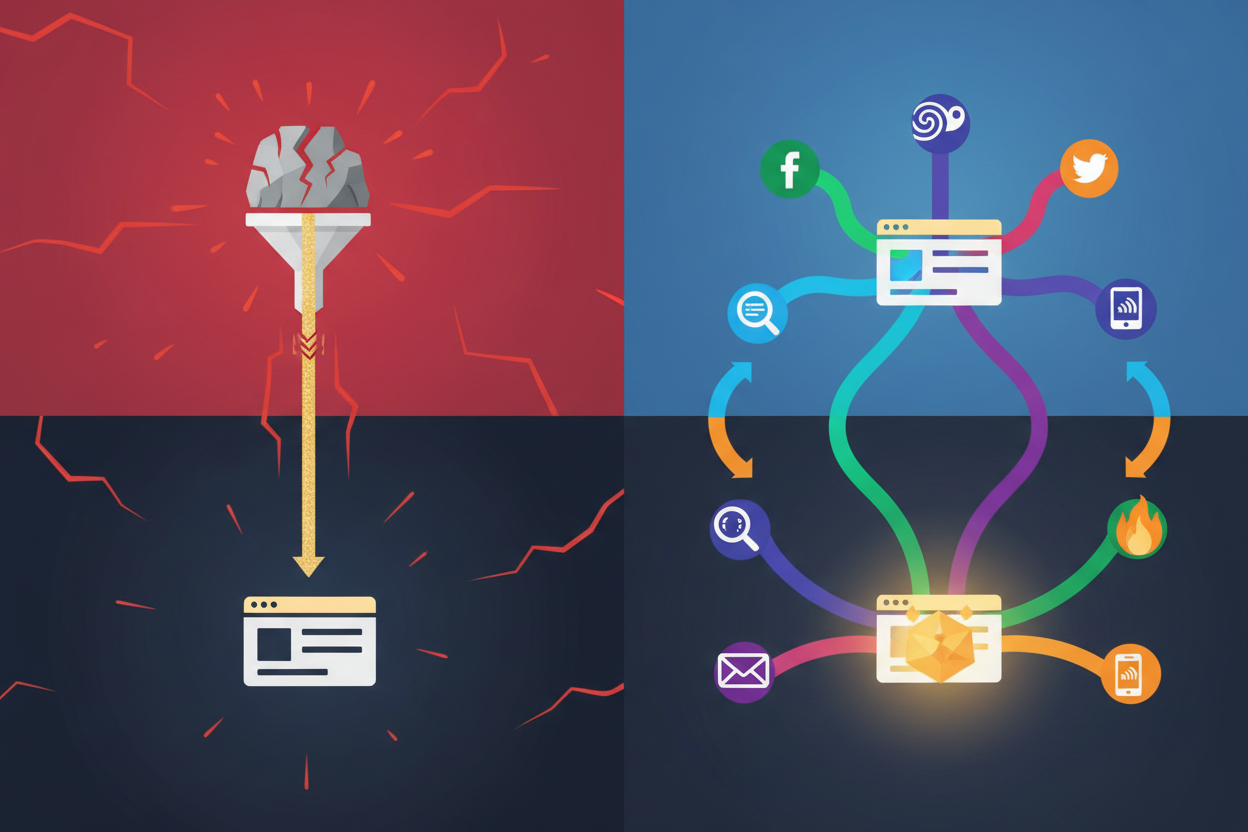
Effective traffic diversification means building a sustainable ecosystem where various channels work together to drive consistent, quality traffic to your website. This approach not only reduces risk but also opens up new opportunities for growth and audience expansion.
The beauty of a diversified traffic strategy lies in its resilience. When one channel experiences a downturn, others can compensate, ensuring your business maintains steady growth even during turbulent times. It’s like having multiple income streams – if one dries up, you’re not left high and dry.
The Risks of Single-Channel Dependency ⚠️
Algorithm Changes: The Silent Business Killer
Search engines and social media platforms regularly update their algorithms, often without warning. These changes can dramatically impact your visibility overnight. I’ve witnessed businesses lose 80% of their organic traffic after a single Google update, simply because they relied too heavily on SEO without building other traffic sources.
Platform Policy Updates
Social media platforms frequently change their terms of service, advertising policies, and content guidelines. What worked yesterday might be prohibited today. Businesses that built their entire marketing strategy around Facebook ads, for instance, have faced significant challenges when policy changes restricted their ability to advertise in their industry.
Increased Competition and Rising Costs
Popular traffic channels become increasingly competitive over time. As more businesses compete for the same audience, costs rise and effectiveness decreases. Early adopters of Google Ads enjoyed low costs per click, but today’s advertisers face much higher expenses for the same keywords.
Technical Issues and Downtime
Even the most reliable platforms experience technical difficulties. When your primary traffic source goes down, having backup channels ensures your business continues to attract visitors and generate revenue.
Essential Traffic Sources for Diversification 🌐
Organic Search Traffic (SEO)
Search engine optimization remains one of the most valuable long-term traffic sources. While it takes time to build, organic traffic is essentially “free” and tends to convert well because users are actively searching for solutions. Focus on creating high-quality, keyword-optimized content that addresses your audience’s pain points.
Paid Advertising Channels
Diversify your paid advertising across multiple platforms. Google Ads, Facebook Ads, LinkedIn Ads, and emerging platforms like TikTok Ads each offer unique advantages. Don’t put all your ad spend in one platform – spread it strategically based on where your audience spends their time.
Social Media Marketing
Build a presence across multiple social platforms, but focus your efforts on where your target audience is most active. Organic social media marketing helps build brand awareness and community, while also driving traffic back to your website through strategic content sharing and engagement.
Email Marketing
Your email list is one of the few traffic sources you truly own. Unlike social media followers, your email subscribers are directly accessible regardless of algorithm changes. Regular newsletters, promotional campaigns, and automated sequences can drive consistent traffic to your site.
Content Marketing and Guest Posting
Creating valuable content for other websites and publications helps you tap into new audiences while building backlinks for SEO. Guest posting, podcast appearances, and collaborative content expand your reach beyond your existing channels.
Direct Traffic and Referrals
Building brand recognition leads to direct traffic – people typing your website URL directly or bookmarking your site. Encourage referrals through excellent customer service, referral programs, and partnerships with complementary businesses.
Building Your Multi-Channel Strategy 🏗️
Start with Audience Research
Before diving into multiple channels, understand where your target audience spends their time online. Use surveys, social media analytics, and customer interviews to identify the platforms and content types that resonate most with your ideal customers.
Prioritize Based on Resources and ROI
You don’t need to be everywhere at once. Start with 3-4 channels that align with your resources and show the highest potential return on investment. As you master these channels, gradually expand to others.
Create Channel-Specific Content
Each traffic source requires tailored content and messaging. What works on LinkedIn might not work on Instagram. Adapt your content format, tone, and messaging to match each platform’s unique culture and user expectations.
Establish Consistent Branding
While your content may vary across channels, maintain consistent branding elements like colors, logos, and core messaging. This helps build recognition as users encounter your brand across different platforms.
Set Up Proper Tracking
Implement comprehensive analytics to track performance across all channels. Use UTM parameters, conversion tracking, and attribution modeling to understand which sources drive the most valuable traffic and conversions.
Measuring and Optimizing Your Diversified Traffic 📊
Key Metrics to Monitor
Track more than just visitor numbers. Focus on quality metrics like conversion rates, engagement time, bounce rates, and customer lifetime value from each traffic source. This helps you identify which channels bring the most valuable visitors.
Regular Performance Reviews
Conduct monthly reviews of your traffic sources. Look for trends, identify underperforming channels, and reallocate resources to the most effective sources. Market conditions change, and your strategy should adapt accordingly.
A/B Testing Across Channels
Continuously test different approaches within each channel. Try new ad creatives, content formats, posting times, and targeting options. What you learn in one channel often applies to others, creating synergies across your diversified approach.
Budget Allocation Strategies
Avoid the temptation to put all your budget into the highest-performing channel. Maintain a balanced allocation that allows for testing new opportunities while scaling successful channels. A good rule of thumb is the 70-20-10 approach: 70% on proven channels, 20% on promising opportunities, and 10% on experimental channels.
Common Mistakes to Avoid ❌
Spreading Too Thin Too Quickly
Many businesses try to be everywhere at once, resulting in mediocre performance across all channels. It’s better to excel at a few channels than to be average at many. Master 2-3 channels before expanding further.
Neglecting Channel Maintenance
Diversification isn’t a “set it and forget it” strategy. Each channel requires ongoing attention, optimization, and adaptation. Neglecting any channel can lead to declining performance and missed opportunities.
Ignoring Channel Synergies
Your traffic sources shouldn’t operate in isolation. Look for ways to create synergies – use social media to promote your email newsletter, repurpose blog content for multiple platforms, and cross-promote between channels.
Focusing Only on Vanity Metrics
Don’t get caught up in follower counts or page views. Focus on metrics that directly impact your business goals, such as qualified leads, sales, and customer acquisition costs from each channel.
Conclusion: Your Path to Traffic Independence 🚀
Traffic diversification isn’t just a smart marketing strategy – it’s essential for long-term business survival in our rapidly changing digital landscape. By spreading your traffic sources across multiple channels, you’re building a resilient foundation that can weather algorithm changes, policy updates, and market disruptions.
Remember, successful diversification takes time and patience. Start with a solid foundation in 2-3 channels, master them, then gradually expand your reach. Focus on quality over quantity, and always keep your audience’s needs at the center of your strategy.
The digital marketing world will continue to evolve, but businesses with diversified traffic sources will be the ones that not only survive but thrive. Don’t wait for a crisis to realize the importance of not putting all your eggs in one basket. Start building your diversified traffic strategy today, and give your business the stability and growth potential it deserves. 💪
Your future self – and your business – will thank you for taking this proactive step toward traffic independence. The question isn’t whether you can afford to diversify your traffic sources; it’s whether you can afford not to.
Frequently Asked Questions 🤔
Q: How many traffic sources should I focus on initially?
A: Start with 2-3 traffic sources that align with your target audience and resources. Master these before expanding to additional channels. Quality execution is more important than quantity.
Q: What percentage of my traffic should come from each source?
A: Aim for no single source to represent more than 40-50% of your total traffic. A healthy distribution might look like: 30% organic search, 25% social media, 20% email, 15% paid ads, and 10% direct/referral traffic.
Q: How long does it take to see results from traffic diversification?
A: It varies by channel. Paid advertising can show immediate results, while SEO and content marketing may take 3-6 months. Social media and email marketing typically show progress within 1-3 months with consistent effort.
Q: Should I stop focusing on my best-performing channel to diversify?
A: No, don’t abandon what’s working. Instead, gradually allocate a portion of your resources to developing new channels while maintaining your successful ones. Think addition, not replacement.
Q: How do I know if my traffic diversification strategy is working?
A: Monitor your traffic stability over time. A successful strategy shows consistent overall traffic even when individual channels fluctuate. Also track conversion rates and customer acquisition costs across all sources to ensure quality remains high.
Q: What’s the biggest mistake businesses make with traffic diversification?
A: The most common mistake is trying to do everything at once without sufficient resources or expertise. This leads to poor performance across all channels rather than excellence in a focused few.


