


The Art of Controversy Marketing: Risky but Rewarding Traffic Strategies 🎯
Table of Contents
1. Introduction: Walking the Tightrope of Controversy
2. What Is Controversy Marketing and Why Does It Work?
3. The Psychology Behind Controversial Content
4. Types of Controversy Marketing Strategies
5. Real-World Success Stories That Broke the Internet
6. The Dark Side: When Controversy Goes Wrong
7. How to Execute Controversy Marketing Safely
8. Measuring Success: KPIs for Controversial Campaigns
9. Building Long-Term Brand Value Through Strategic Controversy
10. Conclusion: Is the Risk Worth the Reward?
11. Frequently Asked Questions
Introduction: Walking the Tightrope of Controversy 🎪
Picture this: You’re scrolling through your social media feed when suddenly, a brand’s post stops you dead in your tracks. It’s bold, provocative, and maybe even a little shocking. Your finger hovers over the share button as you think, “I can’t believe they actually said that!” Congratulations – you’ve just experienced the magnetic pull of controversy marketing.

In today’s saturated digital landscape, where consumers are bombarded with over 5,000 marketing messages daily, breaking through the noise requires more than just pretty visuals and clever copy. Sometimes, it takes guts, calculated risks, and yes – a healthy dose of controversy.
But here’s the million-dollar question: Is stirring the pot worth the potential backlash? Can controversy marketing actually drive meaningful traffic and conversions, or is it just a recipe for disaster? As someone who’s witnessed both spectacular wins and epic fails in this space, I’m here to give you the unfiltered truth about controversy marketing – the good, the bad, and the downright ugly.
What Is Controversy Marketing and Why Does It Work? 🤔
Controversy marketing is the strategic use of provocative, polarizing, or unconventional content to generate buzz, engagement, and ultimately, traffic. It’s not about being offensive for the sake of it – it’s about challenging norms, sparking conversations, and making people feel something strong enough to take action.
The reason controversy works so well boils down to basic human psychology. We’re hardwired to pay attention to things that surprise us, challenge our beliefs, or trigger emotional responses. When a brand takes a bold stance or presents an unexpected perspective, it activates our fight-or-flight response, making us more likely to engage, share, and remember.
From a traffic perspective, controversial content often experiences what I call the “viral velocity effect.” It spreads faster and reaches further than conventional marketing because people feel compelled to share, comment, and discuss. This organic amplification can result in traffic spikes that would cost thousands of dollars to achieve through traditional advertising.
The Psychology Behind Controversial Content 🧠
Understanding why controversy captivates us is crucial for any marketer considering this strategy. There are several psychological triggers at play:
The Curiosity Gap: Controversial headlines create an information gap that our brains desperately want to fill. When we see something that challenges our existing beliefs or presents an unexpected viewpoint, we can’t help but click to learn more.
Social Identity Theory: Controversial content often forces people to choose sides, activating their tribal instincts. People share content that aligns with their identity and values, leading to increased engagement and reach.
Emotional Arousal: High-arousal emotions like anger, excitement, or surprise are more likely to drive sharing behavior than low-arousal emotions like sadness or contentment. Controversy naturally evokes these high-energy responses.
The Bandwagon Effect: When controversial content starts gaining traction, more people jump on board simply because others are talking about it. This creates a snowball effect that can lead to massive traffic surges.
Types of Controversy Marketing Strategies 📊
Not all controversy is created equal. Here are the main types of controversial marketing approaches, each with its own risk-reward profile:
Social Issue Positioning: Taking a stand on polarizing social or political issues. This can be incredibly powerful for brands that want to align with their audience’s values, but it can also alienate potential customers who disagree.
Industry Disruption: Challenging established industry practices or calling out competitors directly. This approach can position your brand as an innovator and thought leader while generating significant buzz.
Cultural Commentary: Commenting on cultural trends, generational differences, or societal shifts. This type of controversy tends to be less risky but can still generate substantial engagement.
Product Positioning: Making bold claims about your product’s superiority or unique benefits. While potentially effective, this approach requires solid evidence to back up your claims.
Shock Value: Using unexpected imagery, language, or concepts to grab attention. This is often the riskiest approach and should be used sparingly and strategically.
Real-World Success Stories That Broke the Internet 🚀
Let’s look at some brands that mastered the art of controversy marketing and reaped the rewards:
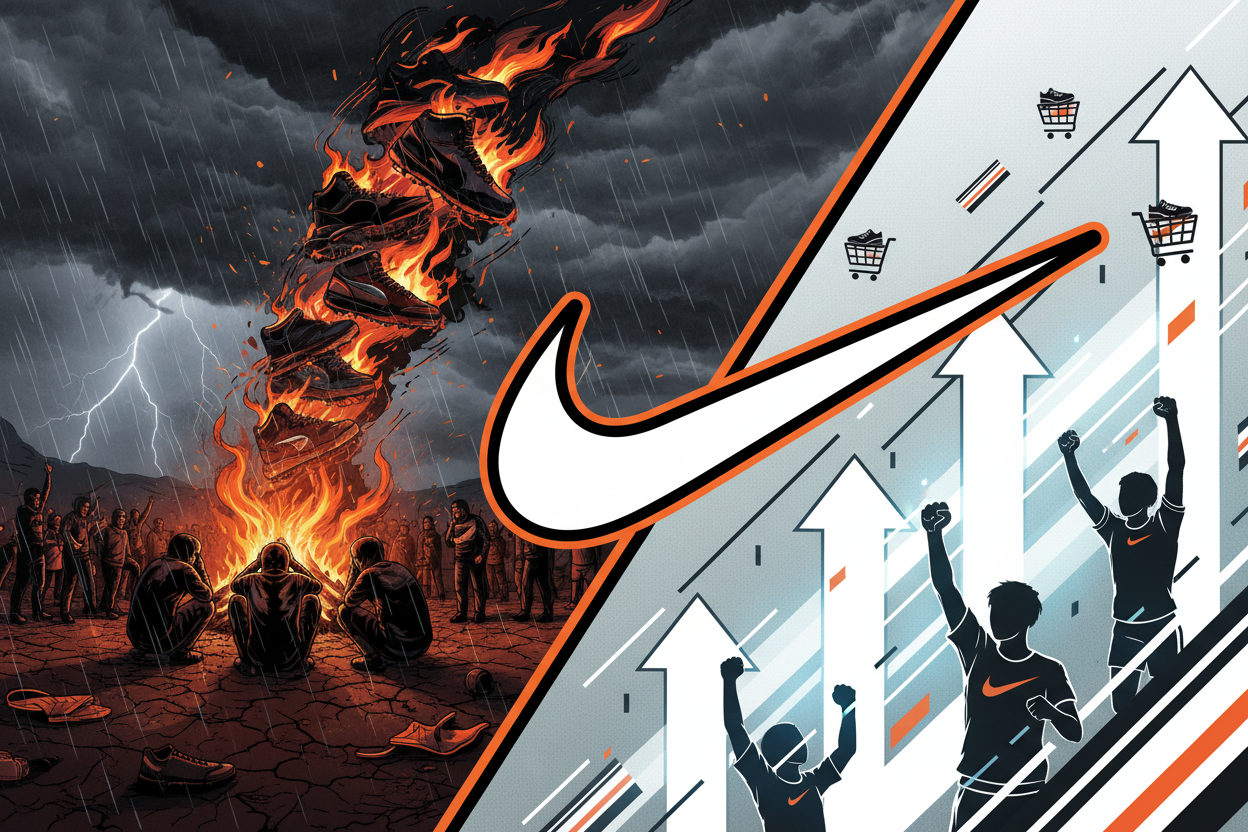
Nike’s Colin Kaepernick Campaign: When Nike featured the controversial NFL quarterback in their “Just Do It” campaign, they knew they were taking a risk. The initial backlash was intense, with some customers burning their Nike shoes. However, the campaign ultimately drove a 31% increase in online sales and strengthened Nike’s position with their core demographic.
Burger King’s “Moldy Whopper”: In 2020, Burger King released images of their iconic Whopper covered in mold to promote their removal of artificial preservatives. The disgusting imagery went viral, generating millions of impressions and effectively communicating their message about natural ingredients.
Dollar Shave Club’s Launch Video: The company’s irreverent, profanity-laden launch video challenged the traditional razor industry’s serious tone. The controversial approach helped them gain 26,000 customers in the first 48 hours and ultimately led to a $1 billion acquisition by Unilever.
These examples show that when executed thoughtfully, controversy marketing can drive massive traffic, increase brand awareness, and even boost sales – despite initial negative reactions.
The Dark Side: When Controversy Goes Wrong ⚠️
For every controversy marketing success story, there are countless examples of campaigns that backfired spectacularly. The consequences can be severe: boycotts, negative press coverage, loss of customers, and lasting damage to brand reputation.
Pepsi’s infamous Kendall Jenner ad is a perfect example of controversy gone wrong. The ad, which appeared to trivialize social justice movements, generated massive backlash and was pulled within 24 hours. The damage to Pepsi’s reputation took months to repair.
Similarly, when Protein World asked “Are you beach body ready?” in their subway ads, they faced intense criticism for promoting unrealistic body standards. While the campaign did generate traffic and sales in the short term, the long-term brand damage may have outweighed the benefits.
These failures highlight the importance of understanding your audience, considering potential unintended consequences, and having a crisis management plan in place before launching controversial content.
How to Execute Controversy Marketing Safely 🛡️
If you’re considering dipping your toes into controversy marketing, here’s how to minimize risks while maximizing rewards:
Know Your Audience Inside and Out: Before creating controversial content, deeply understand your target audience’s values, beliefs, and sensitivities. What might be mildly provocative to one group could be deeply offensive to another.
Stay True to Your Brand Values: Successful controversy marketing feels authentic to the brand. Don’t manufacture controversy that doesn’t align with your company’s core values or mission.
Test Before You Launch: Run your controversial content by focus groups, trusted advisors, or a small segment of your audience before going live. Their feedback can help you identify potential issues and refine your approach.
Prepare for Backlash: Have a crisis management plan ready, including pre-written responses to potential criticisms and a clear decision-making process for whether to double down or pivot.
Focus on Starting Conversations, Not Ending Them: The best controversial content opens up dialogue rather than shutting it down. Aim to be thought-provoking rather than deliberately offensive.
Monitor and Respond Quickly: Keep a close eye on how your controversial content is being received and be ready to respond quickly if things start going south.
Measuring Success: KPIs for Controversial Campaigns 📈
Measuring the success of controversy marketing requires looking beyond traditional metrics. Here are the key performance indicators you should track:
Traffic Metrics: Monitor website visits, page views, and session duration. Controversial content often drives significant traffic spikes, but pay attention to bounce rates and user behavior once they arrive.
Engagement Metrics: Track likes, shares, comments, and mentions across all platforms. High engagement rates often indicate that your controversial content is resonating with your audience.
Sentiment Analysis: Use social listening tools to monitor the overall sentiment around your campaign. A mix of positive and negative sentiment is normal for controversial content, but watch for overwhelming negativity.
Conversion Metrics: Ultimately, traffic means nothing if it doesn’t convert. Track how controversial campaigns impact sales, lead generation, and other conversion goals.
Brand Awareness Metrics: Monitor brand mention volume, reach, and share of voice to understand how controversy affects your overall brand visibility.
Long-term Impact: Look at how controversial campaigns affect customer loyalty, brand perception, and repeat purchase behavior over time.
Building Long-Term Brand Value Through Strategic Controversy 🏗️
The most successful brands use controversy not as a one-off tactic but as part of a broader strategy to build long-term brand value. They understand that taking stands and sparking conversations can create deeper emotional connections with their audience.
Patagonia exemplifies this approach. The outdoor clothing company regularly takes controversial stances on environmental issues, even when it might hurt their bottom line in the short term. Their willingness to be provocative on issues they care about has built incredible brand loyalty and positioned them as authentic advocates for their cause.
The key is consistency. Brands that successfully use controversy marketing don’t just drop provocative content randomly – they build a reputation for being bold, authentic, and unafraid to challenge the status quo. This consistency helps audiences understand what the brand stands for and builds trust over time.
Conclusion: Is the Risk Worth the Reward? 🎲
Controversy marketing is undoubtedly one of the most powerful tools in a marketer’s arsenal for driving traffic and engagement. When executed skillfully, it can cut through the noise, spark meaningful conversations, and create lasting connections with your audience. The potential rewards – viral reach, massive traffic spikes, and increased brand awareness – can be game-changing for businesses willing to take calculated risks.
However, the keyword here is “calculated.” Controversy for controversy’s sake is rarely effective and often backfires. The brands that succeed with this strategy are those that understand their audience deeply, stay true to their values, and approach controversy as a tool for meaningful dialogue rather than cheap attention-grabbing.
My advice? If you’re considering controversy marketing, start small. Test the waters with mildly provocative content before diving into the deep end. Build your crisis management muscles and develop a thick skin for criticism. Most importantly, ensure that any controversial stance you take is authentic to your brand and adds value to the conversation.
Remember, in the attention economy, being ignored is often worse than being criticized. Sometimes, the biggest risk is playing it safe. The question isn’t whether controversy marketing is risky – it absolutely is. The question is whether you’re willing to take that risk to achieve breakthrough results. 💪
Frequently Asked Questions ❓
Q: How do I know if my brand is ready for controversy marketing?
A: Your brand should have a strong foundation, clear values, and an established audience before attempting controversy marketing. You also need robust crisis management capabilities and leadership that’s comfortable with potential backlash.
Q: What’s the difference between controversy marketing and being offensive?
A: Controversy marketing challenges norms and sparks debate while adding value to conversations. Being offensive typically involves crossing ethical lines or attacking groups of people without purpose or benefit.
Q: How quickly should I expect to see results from controversial content?
A: Controversial content often generates immediate spikes in traffic and engagement, sometimes within hours. However, the long-term impact on brand perception and customer loyalty may take weeks or months to fully understand.
Q: Should small businesses avoid controversy marketing?
A: Not necessarily, but small businesses should be extra cautious since they typically have fewer resources to manage potential crises. Start with low-risk controversial content and build your capabilities gradually.
Q: How do I handle negative feedback from controversial campaigns?
A: Respond quickly, professionally, and authentically. Acknowledge valid concerns, stand firm on your core message if appropriate, and avoid getting into heated arguments. Sometimes the best response is no response at all.
Q: Can controversy marketing work for B2B brands?
A: Absolutely! B2B controversy marketing often involves challenging industry practices, taking stands on business-relevant issues, or disrupting traditional approaches. The key is ensuring the controversy is relevant to your professional audience.


