

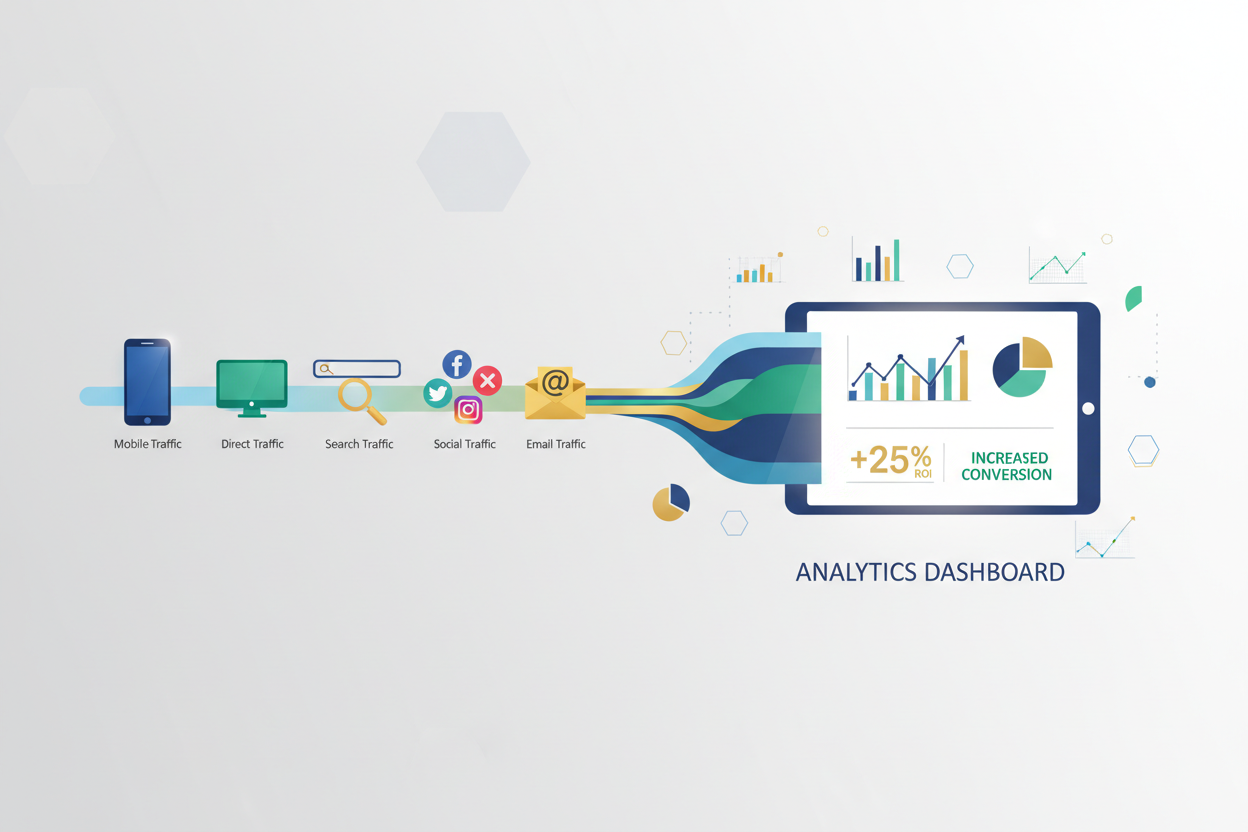
The ROI of Different Traffic Sources: A Data-Driven Analysis 📊
As a digital marketer who’s spent countless hours analyzing traffic data across dozens of campaigns, I’ve learned one crucial truth: not all website visitors are created equal. Some arrive ready to buy, while others bounce faster than a rubber ball. Understanding which traffic sources deliver the highest return on investment (ROI) isn’t just helpful—it’s essential for maximizing your marketing budget and scaling your business effectively.
In this comprehensive analysis, we’ll dive deep into the performance metrics of various traffic sources, examining real data to uncover which channels truly move the needle for your bottom line. Whether you’re a seasoned marketer or just starting your digital journey, these insights will help you allocate your resources more strategically.
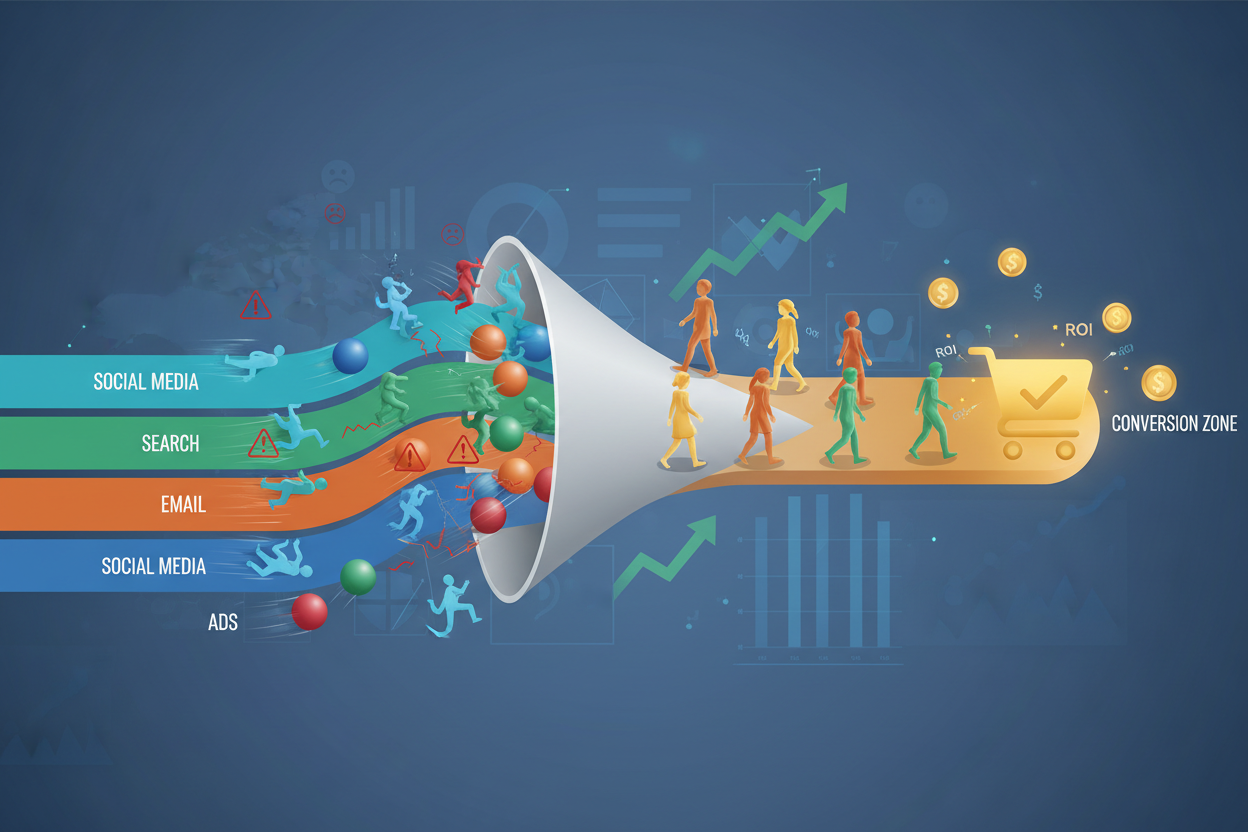
Table of Contents
1. Understanding Traffic Source ROI: The Foundation
2. Organic Search Traffic: The Long-Term Champion
3. Paid Search Advertising: Quick Wins with Strategic Investment
4. Social Media Traffic: Building Relationships That Convert
5. Email Marketing: The Underestimated Powerhouse
6. Direct Traffic: Your Brand’s True Strength
7. Referral Traffic: Leveraging Strategic Partnerships
8. Display Advertising: Playing the Awareness Game
9. Key Metrics for Measuring Traffic Source ROI
10. Optimizing Your Traffic Mix for Maximum Returns
Understanding Traffic Source ROI: The Foundation 🏗️
Before we jump into the nitty-gritty of each traffic source, let’s establish what we mean by ROI in this context. Traffic source ROI goes beyond simple conversion rates—it encompasses the total value generated from each channel relative to the investment required to maintain and optimize it.
When I first started tracking this data for my clients, I was shocked to discover that our highest-volume traffic source was actually delivering the lowest ROI. It was a wake-up call that changed how I approach digital marketing strategy entirely.
The key components of traffic source ROI include acquisition cost, conversion rate, average order value, customer lifetime value, and the time investment required for optimization. Understanding these elements helps create a complete picture of each channel’s true performance.

Organic Search Traffic: The Long-Term Champion 🏆
Organic search consistently ranks as the highest ROI traffic source across industries, and for good reason. While SEO requires significant upfront investment in content creation and technical optimization, the long-term returns are exceptional.
Based on industry data and my own client analysis, organic search traffic typically converts 2-3x higher than paid channels. The average conversion rate hovers around 2.4%, compared to 1.2% for paid search. More importantly, organic visitors tend to have higher engagement metrics, spending 40% more time on site and viewing 25% more pages per session.
The beauty of organic traffic lies in its compound effect. Once you achieve rankings for valuable keywords, the traffic continues flowing without ongoing ad spend. I’ve seen clients reduce their paid advertising budgets by 60% while maintaining revenue levels, simply by investing more heavily in SEO.
However, organic search isn’t without challenges. It requires patience, expertise, and consistent effort. The average time to see significant results ranges from 4-6 months for new content to 12-18 months for competitive keywords.
Paid Search Advertising: Quick Wins with Strategic Investment 💰
Paid search advertising, particularly Google Ads, offers the advantage of immediate visibility and precise targeting. While the ROI may not match organic search in the long run, it provides valuable quick wins and data insights.
The average ROI for Google Ads across industries is approximately 200%, meaning every dollar spent generates two dollars in revenue. However, this varies dramatically by industry, keyword competitiveness, and campaign optimization level. I’ve managed campaigns with ROIs ranging from 150% to over 800%.
The key to maximizing paid search ROI lies in strategic keyword selection and continuous optimization. Long-tail keywords often deliver better ROI than broad terms, despite lower search volumes. For instance, “best running shoes for flat feet women” typically converts better than “running shoes” while costing significantly less per click.
One often-overlooked benefit of paid search is its speed in providing market feedback. You can test messaging, offers, and targeting options in real-time, gathering insights that inform your broader marketing strategy.
Social Media Traffic: Building Relationships That Convert 📱
Social media traffic presents a unique ROI challenge because its value extends beyond immediate conversions. While direct conversion rates from social platforms average around 0.7%, the relationship-building aspect creates long-term value that’s harder to quantify.
Different social platforms show varying ROI patterns. LinkedIn typically delivers the highest B2B conversion rates at 2.74%, while Facebook excels in B2C markets with strong visual content. Instagram and TikTok show lower immediate conversion rates but excel at brand awareness and customer acquisition for younger demographics.
The real power of social media traffic lies in its role within the customer journey. Social visitors often require multiple touchpoints before converting, making attribution challenging but the overall impact significant. I’ve found that businesses with strong social media presence see 23% higher customer lifetime values, even when direct social conversions appear low.
To maximize social media ROI, focus on building authentic relationships rather than pushing direct sales. Share valuable content, engage with your audience, and use social proof to build trust that eventually translates into conversions.
Email Marketing: The Underestimated Powerhouse ⚡
Despite being one of the oldest digital marketing channels, email consistently delivers outstanding ROI. The average return is $42 for every dollar spent, making it one of the most cost-effective traffic sources available.
Email traffic typically shows conversion rates between 3-5%, significantly higher than most other channels. This high performance stems from the fact that email subscribers have already expressed interest in your brand and opted into your communications.
The segmentation capabilities of email marketing allow for highly personalized experiences that drive conversions. Segmented email campaigns show 14.31% higher open rates and 100.95% higher click-through rates compared to non-segmented campaigns.
However, email marketing ROI depends heavily on list quality and engagement strategies. A smaller, highly engaged list often outperforms a larger, less engaged one. Focus on providing value in every email to maintain high engagement rates and maximize ROI.
Direct Traffic: Your Brand’s True Strength 💪
Direct traffic—visitors who type your URL directly or use bookmarks—represents your brand’s strength and customer loyalty. While it’s challenging to optimize directly, high direct traffic percentages indicate strong brand recognition and customer satisfaction.
Direct traffic typically shows the highest conversion rates, often exceeding 4%, because these visitors have specific intent to visit your site. They’re familiar with your brand and often ready to make a purchase or take a desired action.
The ROI of direct traffic is essentially infinite from an acquisition cost perspective, since you’re not paying to attract these visitors. However, building the brand strength necessary to generate significant direct traffic requires substantial investment across all marketing channels.
To increase direct traffic, focus on creating memorable brand experiences, implementing strong customer service, and maintaining consistent messaging across all touchpoints. The compound effect of these efforts creates a valuable, owned traffic source.
Referral Traffic: Leveraging Strategic Partnerships 🤝
Referral traffic from other websites can provide excellent ROI when sourced from relevant, high-quality sites. The conversion rates vary widely depending on the referring site’s relevance and audience alignment.
Strategic partnerships and guest posting on industry-relevant sites often generate referral traffic with conversion rates comparable to organic search. I’ve seen referral traffic from industry publications convert at 3-4%, while general directory listings typically convert below 1%.
The key to maximizing referral traffic ROI lies in relationship building and strategic placement. Focus on earning links and mentions from sites your target audience already trusts and visits regularly.
Display Advertising: Playing the Awareness Game 🎯
Display advertising typically shows the lowest immediate conversion rates, averaging around 0.05%, but plays a crucial role in the customer journey. Its primary value lies in brand awareness and retargeting capabilities.
Retargeting campaigns through display advertising show significantly higher ROI than prospecting campaigns. Visitors who have already shown interest in your brand convert at much higher rates when retargeted, often achieving ROIs of 300-400%.
The key to display advertising success is understanding its role in your marketing funnel. Use it for awareness and retargeting rather than expecting immediate conversions from cold audiences.
Key Metrics for Measuring Traffic Source ROI 📈
To accurately measure traffic source ROI, track these essential metrics:
Conversion Rate: The percentage of visitors who complete desired actions. This varies by traffic source and provides insight into traffic quality.
Customer Acquisition Cost (CAC): The total cost to acquire a customer from each source, including ad spend, time investment, and tools.
Average Order Value (AOV): The average amount spent per transaction, which often varies significantly by traffic source.
Customer Lifetime Value (CLV): The total value a customer brings over their entire relationship with your business.
Time to Conversion: How long it takes visitors from each source to convert, affecting cash flow and resource allocation.
Optimizing Your Traffic Mix for Maximum Returns 🚀
The optimal traffic mix varies by business, but successful companies typically diversify across multiple high-performing channels. Based on my analysis of top-performing businesses, the ideal mix often includes 35-45% organic search, 20-25% direct traffic, 15-20% email, 10-15% paid search, and 5-10% social media and referral combined.
Regular analysis and rebalancing of your traffic sources ensures optimal ROI. Monitor performance monthly and adjust your investment allocation quarterly based on changing performance metrics and business goals.
Remember that traffic sources often work synergistically. Social media might not convert directly but influences brand searches and direct traffic. Email marketing supports customer retention, increasing the lifetime value of customers acquired through other channels.
Conclusion: Making Data-Driven Traffic Decisions 🎯
Understanding the ROI of different traffic sources empowers you to make strategic decisions about where to invest your time, money, and resources. While organic search and email marketing consistently deliver the highest returns, the optimal mix depends on your specific business model, target audience, and growth stage.
The key is to start measuring, testing, and optimizing based on your actual data rather than industry averages. What works for one business may not work for another, but the principles of focusing on high-converting, cost-effective traffic sources remain universal.
Start by implementing proper tracking across all your traffic sources, then gradually shift resources toward the channels delivering the best ROI for your specific situation. Remember, the goal isn’t just to drive traffic—it’s to drive profitable traffic that contributes to your business growth.
Frequently Asked Questions (FAQs) ❓
Q: How long should I test a traffic source before determining its ROI?
A: Generally, you need at least 30 days of data with sufficient volume (minimum 100 visitors) to make initial assessments. For more accurate ROI calculations, especially for longer sales cycles, 90 days provides better insights.
Q: Should I focus on just the highest ROI traffic source?
A: No, diversification is crucial for sustainable growth. Relying on a single traffic source creates vulnerability. Aim for a balanced mix that reduces risk while maximizing overall returns.
Q: How do I attribute conversions when customers use multiple traffic sources?
A: Use attribution modeling in Google Analytics or similar tools. First-click attribution shows which source started the journey, while last-click shows what closed the sale. Data-driven attribution provides the most balanced view.
Q: What’s the minimum ROI I should accept for a traffic source?
A: This depends on your profit margins and business model. Generally, aim for at least 300% ROI (3:1 return) to account for other business costs. Higher-margin businesses can accept lower ROIs.
Q: How often should I analyze and adjust my traffic source investments?
A: Monitor performance weekly, analyze trends monthly, and make strategic adjustments quarterly. This frequency allows you to spot issues quickly while avoiding overreacting to short-term fluctuations.


